Delivery in 3–5 days
Lab tested · every batch
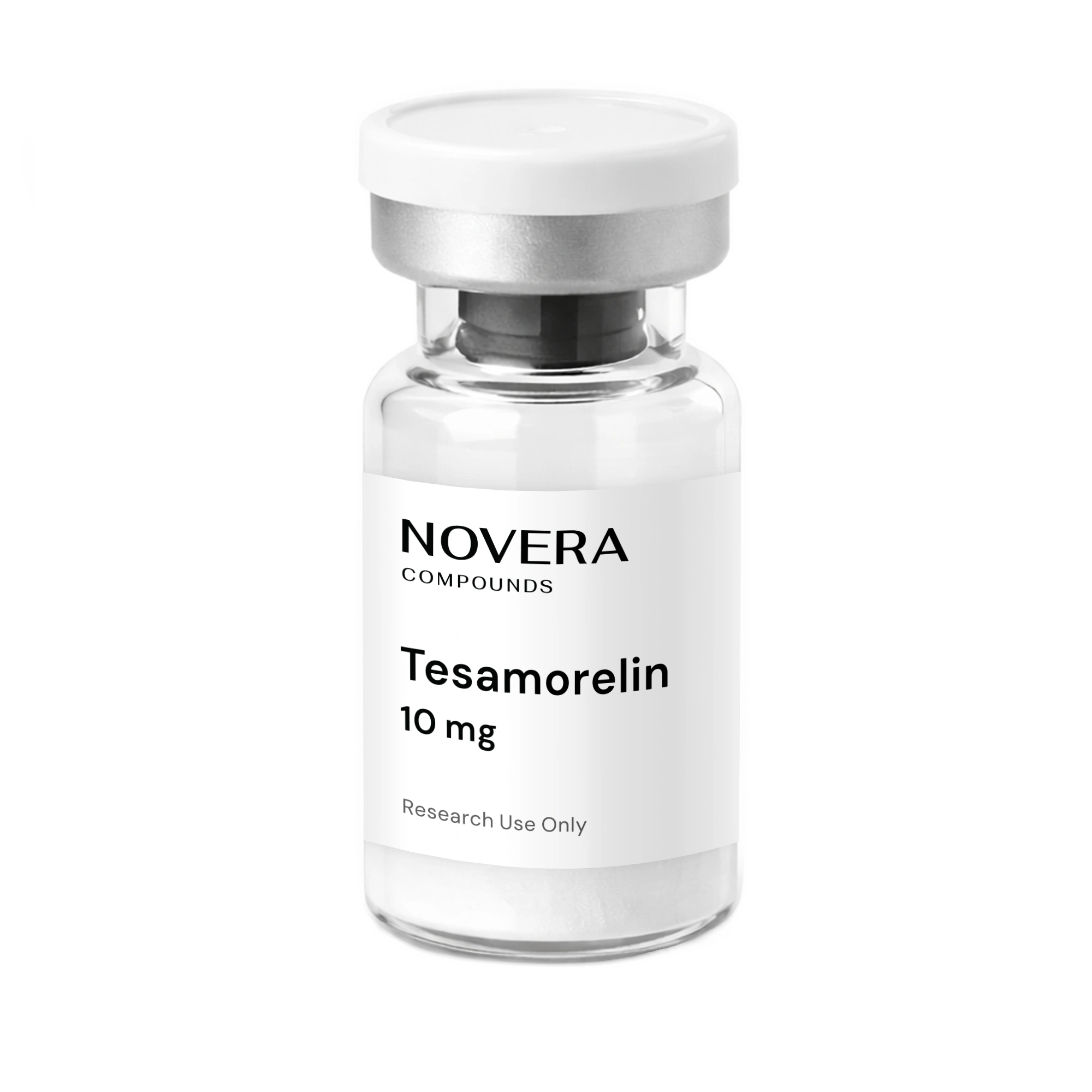
Tesamorelin 10mg
Ambient shipping · Express available · 28-day delivery guarantee
Bulk pricing. Buy 6 or more vials and save up to 26% — pick a quantity tier above.
99% Purity Guarantee
Each peptide batch is tested and verified to meet or exceed 98–99% purity (HPLC).
Storage Handling Notice
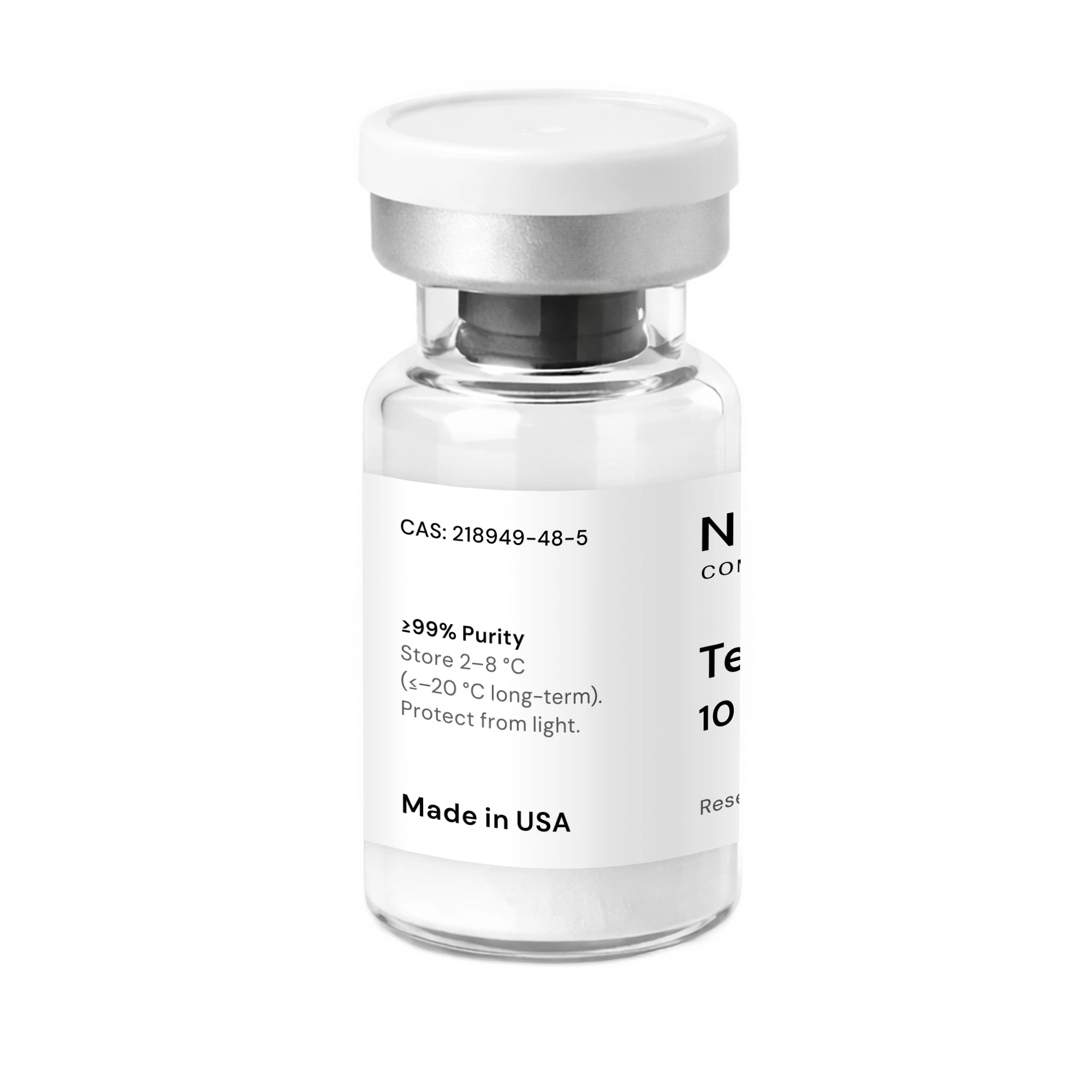
Store 2–8 °C (≤–20 °C long-term). RT exposure during transport acceptable. Protect from light.
Certificate of Analysis (COA)
Sign in to view lab results →Tested for: Purity (HPLC). Lab result PDFs are listed below for signed-in researchers.
Batch tests: Purity
2 lab reports available to signed-in researchers.
For research and laboratory use only. Not for human or animal consumption.
Tesamorelin 10mg from Novera provides research teams with a GMP-manufactured, COA-verified GHRH analog for preclinical pituitary receptor pharmacology, somatotropic axis signaling pathway characterization, and metabolic marker endpoint studies. Produced by Elivena in USA-certified facilities to approximately 99% purity, each vial delivers a consistently characterized 44-amino acid sequence with N-terminal modification integrity confirmed by independent analysis. Global secure shipping is available for laboratory orders. Every order includes COA documentation, handling instructions, and access to technical support for GHRH receptor pharmacology and somatotropic axis experimental protocol design.
Product overview
Tesamorelin 10mg is suited for research teams investigating GHRH analog receptor pharmacology, somatotropic axis signaling pathway dynamics, and pituitary cell response marker quantification in controlled preclinical and in-vitro models. Laboratories studying growth hormone-releasing hormone receptor binding kinetics, downstream IGF-1 pathway marker expression, or visceral adipose tissue signaling dynamics in preclinical metabolic models will find this compound relevant to mechanistic study designs. Research programs examining GHRH analog structural modifications and their effects on receptor interaction stability and half-life kinetics benefit from Tesamorelin’s well-characterized 44-amino acid sequence. Produced in USA GMP-certified facilities, each vial is COA-verified for purity and sequence identity to approximately 99%.
Research focus
GHRH Receptor Pharmacology Studies
Tesamorelin supports in-vitro investigation of GHRH receptor binding kinetics, ligand affinity characterization, and receptor occupancy dynamics in pituitary somatotroph cell line and primary culture models. Researchers examining cAMP pathway activation, PKA phosphorylation cascade dynamics, and downstream transcriptional marker expression following GHRH receptor stimulation use Tesamorelin as a primary reference agonist with defined structural modification for comparative receptor pharmacology study designs.
Somatotropic Axis Signaling Marker Quantification
Laboratories studying the somatotropic axis use Tesamorelin to quantify downstream molecular marker activity including growth hormone secretion assay endpoints, IGF-1 pathway signaling marker expression, and somatostatin feedback interaction dynamics in controlled preclinical systems. Multi-timepoint study designs allow systematic observation of signaling cascade progression and regulatory feedback mechanism activity across extended experimental observation windows.
Structural Modification and Half-Life Kinetics Research
Tesamorelin’s N-terminal trans-3-hexenoic acid modification makes it a relevant model compound for studies examining how synthetic GHRH analog structural modifications influence plasma stability, enzymatic degradation kinetics, and receptor binding duration profiles. Researchers investigating structure-activity relationships in GHRH peptide chemistry use Tesamorelin alongside unmodified GHRH reference standards for comparative stability and receptor interaction characterization.
Preclinical Metabolic Pathway Investigation
Tesamorelin is incorporated into preclinical metabolic research designs examining the relationship between GHRH receptor activation and downstream lipid metabolism signaling marker expression in adipose tissue model systems. Research quantifying lipolytic enzyme activity markers, adipokine pathway expression changes, and metabolic regulatory endpoint dynamics following somatotropic axis stimulation uses Tesamorelin as a structurally characterized GHRH analog tool compound.
Methodological notes
Preparation Guidelines
Reconstitute lyophilized Tesamorelin 10mg with sterile bacteriostatic water using standard sterile laboratory technique. Reconstitution volume should be determined based on the target working concentration specified by the study design. The 10mg vial provides sufficient material for multi-administration experimental series depending on protocol concentration requirements. Use calibrated laboratory equipment throughout all preparation steps and document reconstitution in accordance with institutional research record-keeping standards.
Storage Conditions
Store lyophilized peptide at 2–8°C, protected from light and moisture, prior to reconstitution. Following reconstitution, maintain strict refrigeration at 2–8°C and use within the timeframe specified in the laboratory protocol to preserve GHRH analog integrity. Cold-chain shipping is not required, but immediate refrigeration upon receipt is recommended. Each Elivena vial is supplied with COA documentation and handling guidance.
Protocol Duration Guidelines
Preclinical research protocols investigating somatotropic axis signaling marker progression typically span 12–26 weeks, depending on the molecular endpoints and signaling pathway dynamics under investigation. Studies quantifying visceral adipose tissue signaling marker changes in preclinical metabolic models may observe measurable endpoint progression within 8–16 weeks. Monitor GHRH receptor pathway markers, IGF-1 signaling endpoints, and downstream metabolic pathway markers at defined experimental intervals throughout the observation period.
Quality & sourcing
USA GMP Manufacturing
Produced in USA GMP-certified facilities to approximately 99% purity, each 10mg vial is independently verified by COA documentation confirming the complete 44-amino acid sequence identity, N-terminal modification integrity, purity grade, and batch-specific quality control data. This characterization ensures reproducible, pharmaceutical-grade material for advanced GHRH receptor pharmacology and somatotropic axis signaling research.
Chemical properties
- CAS: 218949-48-5
- Chemical Formula: C₂₂₁H₃₆₆N₇₂O₆₇S
- Molecular Weight: 5136 g/mol
- Peptide Sequence: Trans-3-hexenoyl-YADAIFTNSYRKVLGQLSARKLLQDIMSRQQGESNQERGARARL-NH2
- Synonyms: TH9507
- Shelf life: 24 months from the manufacturing date.
Key features
GHRH Analog Structural Profile
Tesamorelin is a synthetic analog of growth hormone-releasing hormone (GHRH), a 44-amino acid hypothalamic peptide that binds GHRH receptors on pituitary somatotroph cells, initiating intracellular cAMP-dependent signaling cascades that regulate growth hormone secretion dynamics. Tesamorelin incorporates a trans-3-hexenoic acid modification at its N-terminus, extending plasma half-life relative to endogenous GHRH and making it a useful model compound for studying how structural modifications influence GHRH receptor binding stability and downstream pituitary signaling duration in controlled experimental systems.
Pituitary Receptor Binding and Somatotropic Axis Signaling
Tesamorelin is studied for its binding activity at pituitary GHRH receptors and the consequent activation of Gs-protein-mediated adenylyl cyclase signaling, cAMP second messenger elevation, and downstream PKA-dependent pathway activity in somatotroph cell models. Researchers use it to examine receptor occupancy dynamics, signal transduction cascade characterization, and downstream IGF-1 pathway marker expression as molecular endpoints for GHRH analog receptor pharmacology study designs.
Visceral Adipose Tissue Signaling Research
Tesamorelin is studied in preclinical metabolic models for its association with visceral adipose tissue lipolytic signaling marker activity and lipid metabolism pathway endpoint quantification. Researchers examining the molecular relationship between somatotropic axis activation and adipose tissue signaling dynamics use Tesamorelin as a structurally defined GHRH analog reference compound in controlled preclinical metabolic research designs, without referencing clinical outcome or physiological benefit endpoints.
USA GMP Manufacturing
Produced in USA GMP-certified facilities to approximately 99% purity, each 10mg vial is independently verified by COA documentation confirming the complete 44-amino acid sequence identity, N-terminal modification integrity, purity grade, and batch-specific quality control data. This characterization ensures reproducible, pharmaceutical-grade material for advanced GHRH receptor pharmacology and somatotropic axis signaling research.
Research & Education Tool
Peptide Dosage Calculator
Enter the vial amount, diluent volume, and target amount to estimate concentration, draw volume on a 1 mL U-100 syringe, and approximate vial yield.
For research and educational use only. Check all values against the product label, certificate of analysis, and any applicable professional guidance before relying on the result.
mg
Concentration
-
mcg / mL
Volume per Dose
-
-
Estimated Draws / Vial
-
rounded down to whole draws
Draw Reference
Enter values to estimate the syringe mark.
0
-
-
-
-
Express Tracked Shipping — $25
Prices:
- Flat $25 per order
- Ambient shipping, safe for lyophilized peptides
Regular Tracked Shipping — $15
Delivery in 5–10 days
Prices:
- Flat $15 per order
- Free on monthly Build a Box orders
What structural feature distinguishes Tesamorelin from endogenous GHRH in research applications?
Tesamorelin incorporates a trans-3-hexenoic acid modification at the N-terminus of the native 44-amino acid GHRH sequence. This modification confers increased resistance to enzymatic degradation, extending plasma half-life relative to unmodified GHRH. Researchers studying the effect of structural modifications on GHRH analog receptor binding duration, signaling cascade kinetics, and comparative stability profiles use this distinction as the basis for structure-activity relationship study designs.
What reconstitution approach is recommended for the 10mg vial?
Reconstitute with sterile bacteriostatic water using sterile laboratory technique, at a volume determined by the target working concentration specified in the experimental protocol. Detailed reconstitution procedures should follow institutional laboratory standards and be documented in accordance with study record-keeping requirements.
What molecular endpoints are typically monitored in Tesamorelin research protocols?
Research programs using Tesamorelin typically monitor GHRH receptor pathway activity markers, cAMP second messenger dynamics, downstream IGF-1 pathway signaling endpoints, and, in preclinical metabolic model designs, adipose tissue lipolytic signaling and lipid metabolism marker expression. Endpoint selection and monitoring frequency are determined by the specific signaling pathways and molecular mechanisms under investigation within the study design.