
Delivery in 3–5 days
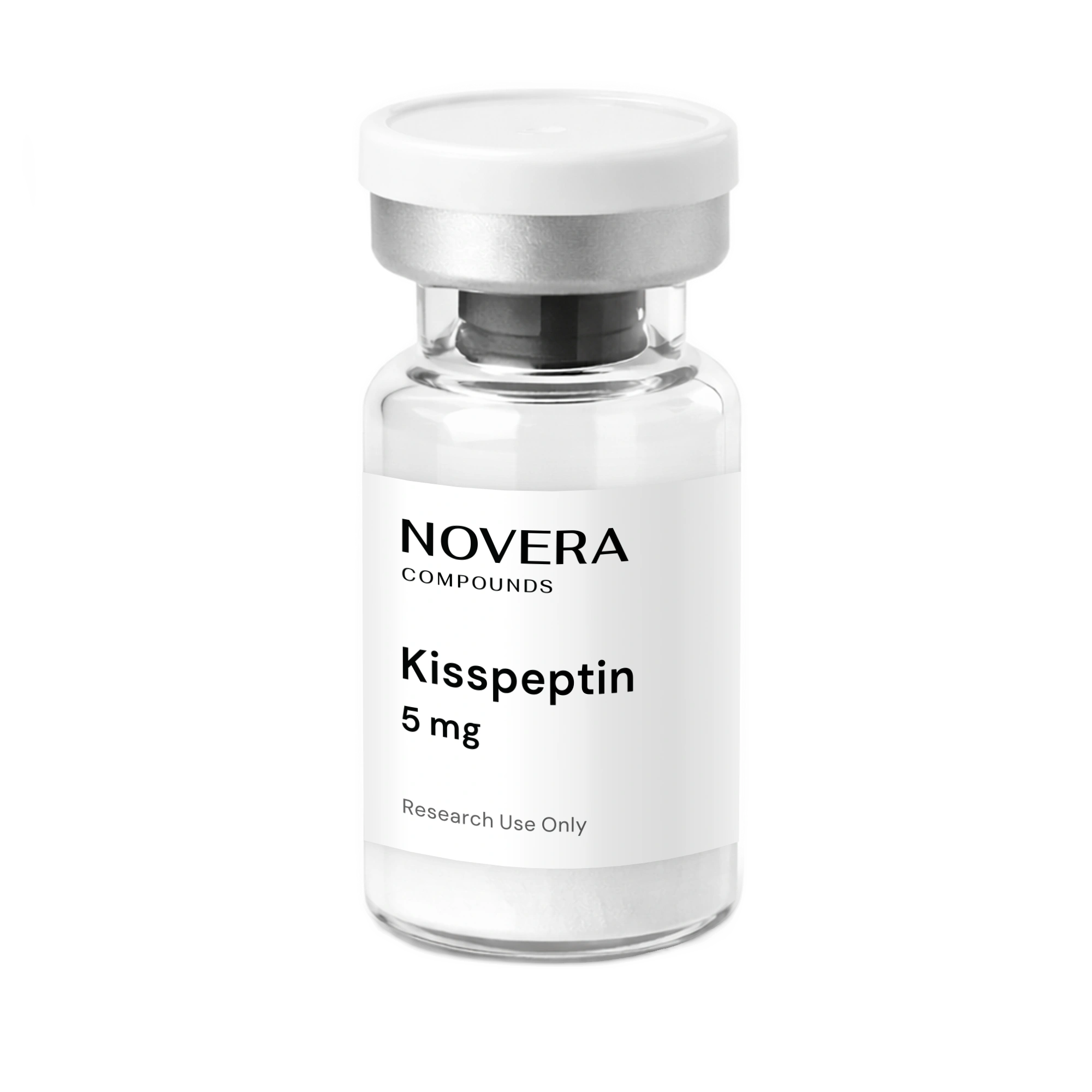
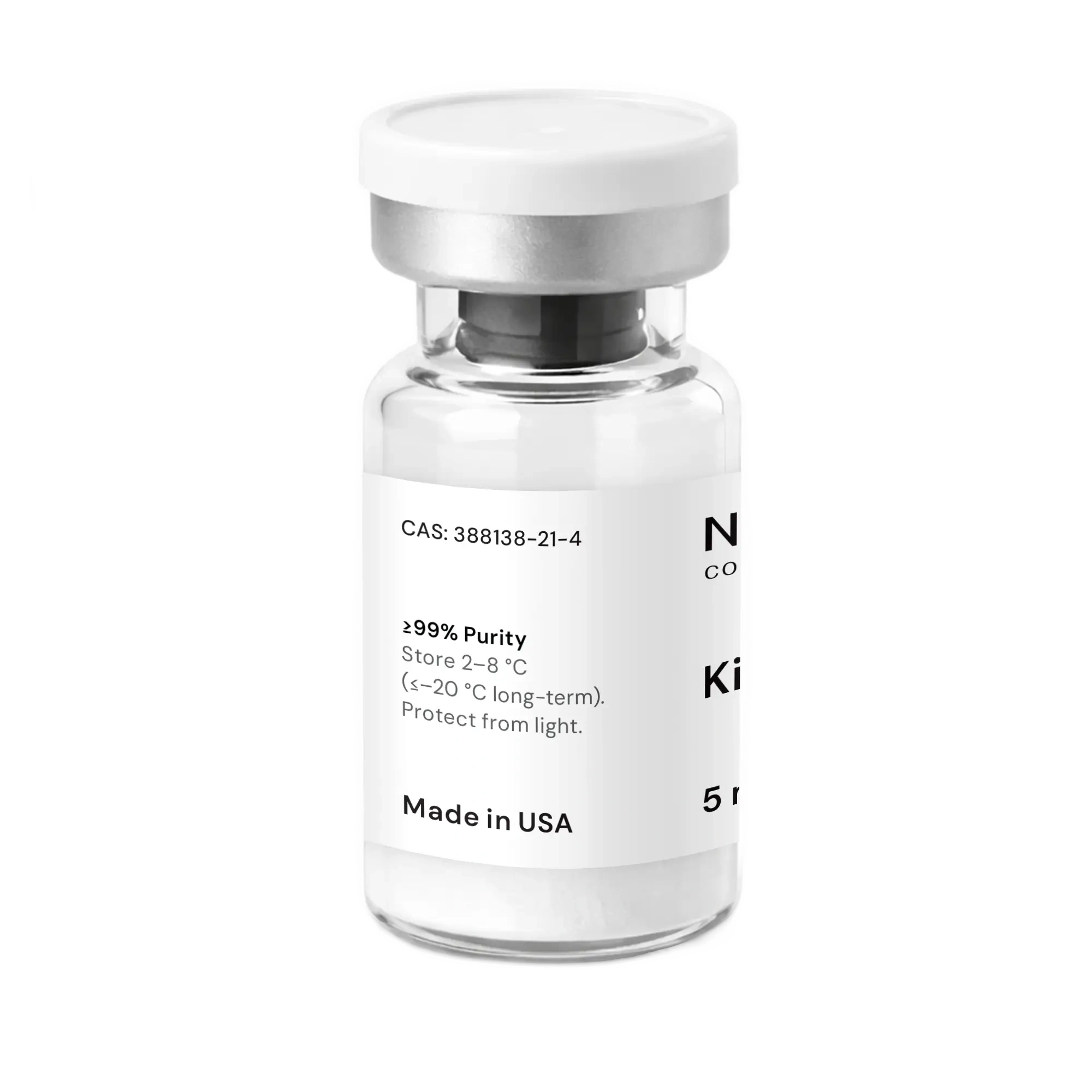
Kisspeptin 5mg
Ambient shipping · Express available · 28-day delivery guarantee
Bulk pricing. Buy 6 or more vials and save up to 26% — pick a quantity tier above.
99% Purity Guarantee
Each peptide batch is tested and verified to meet or exceed 98–99% purity (HPLC).
Storage Handling Notice
Store 2–8 °C (≤–20 °C long-term). RT exposure during transport acceptable. Protect from light.
Certificate of Analysis (COA)
Sign in to view lab results →Tested for: Purity (HPLC). Lab result PDFs are listed below for signed-in researchers.
1 lab report available to signed-in researchers.
For research and laboratory use only. Not for human or animal consumption.
Researchers ordering Kisspeptin 5mg from Novera receive a USA-manufactured, pharmaceutical-grade neuropeptide formulated for laboratory investigation of HPG axis regulation and reproductive neuroendocrine mechanisms. Each order includes complete COA documentation, experimental handling guidance, and access to technical support for research protocol design. Explore Novera’s full catalog of reproductive and neuroendocrine research peptides for comprehensive laboratory applications.
Product overview
Laboratories studying reproductive endocrinology, hypothalamic signaling, or fertility-related mechanisms in experimental models benefit from Kisspeptin’s well-characterized GnRH-stimulating properties. All Novera Kisspeptin is manufactured under strict GMP standards to ensure reproducible, reliable experimental outcomes.
Research focus
Reproductive Hormone Cascade Investigation
In experimental models, Kisspeptin modulates GnRH pulsatility and downstream LH and FSH secretion. Research protocols support assessment of HPG axis dynamics, gonadotropin release patterns, and upstream reproductive hormone regulation. Both acute single-dose and repeated administration study designs are supported within preclinical frameworks.
Fertility and Reproductive Physiology Research
Kisspeptin facilitates experimental investigation of ovulation timing, spermatogenesis, and reproductive cycle regulation in preclinical models. Multi-cycle or extended protocols enable systematic mapping of GnRH-driven reproductive patterns and fertility-related endpoints across male and female experimental models.
HPG Axis Regulation Studies
Kisspeptin supports targeted investigation of hypothalamic-pituitary-gonadal axis responsiveness, gonadotropin dynamics, and neuroendocrine feedback mechanisms in preclinical settings. Its upstream mode of action makes it particularly valuable for studies examining central regulatory control of reproductive hormone pathways within experimental designs.
Verified Purity
Nearly 99% purity ensures consistent, reproducible results across laboratory investigations and supports high-confidence experimental data collection.
Methodological notes
Storage Conditions
Store lyophilized Kisspeptin powder at 2–8°C in a cool, dark environment prior to reconstitution. Protect from light at all times to preserve neuropeptide structural integrity. This product does not require cold chain shipping under standard laboratory receiving conditions.
Reconstitution Protocol
Reconstitute with sterile bacteriostatic water or saline under strict aseptic technique in accordance with institutional laboratory safety and biosafety protocols. Following reconstitution, the solution must be refrigerated immediately and used within the timeframe specified in accompanying experimental documentation.
Stability
Lyophilized material stored at recommended temperatures retains integrity for extended periods. Reconstituted Kisspeptin should be handled under maintained sterile conditions to preserve neuropeptide activity and ensure reproducible experimental results. Detailed preparation and handling protocols accompany each order.
Experimental Study Duration Guidance
Acute single-dose protocols may assess rapid neuroendocrine responses in experimental models within hours of administration. Fertility-focused and reproductive cycle studies typically employ repeated dosing over multiple weeks to evaluate ovulatory, spermatogenic, or gonadotropin secretion effects comprehensively. Data collection should systematically capture reproductive hormone levels, gonadotropin secretion markers, and relevant neuroendocrine endpoints to ensure reproducibility across study designs.
Quality & sourcing
USA GMP Manufacturing
Produced in certified USA GMP facilities with full Certificate of Analysis (COA) verification, ensuring a high-quality, reproducible peptide suitable for precise laboratory applications and systematic experimental study.
Chemical properties
- CAS: 388138-21-4
- Chemical Formula: C₆₃H₈₃N₁₇O₁₄
- Molecular Weight: 1302.4 g/mol
- Peptide Sequence: Tyr-Asn-Trp-Asn-Ser-Phe-Gly-Leu-Arg-Phe-NH₂
- Synonyms: Metastin (45–54), KP-10
- Shelf life: 24 months from the manufacturing date.
Key features
Upstream Regulator of Reproductive Hormone Cascades in Experimental Models
Kisspeptin activates KISS1 receptors to stimulate GnRH neurons in preclinical models, initiating the downstream reproductive hormone cascade including LH and FSH secretion. This upstream mechanism supports research into hypothalamic control of reproductive physiology, puberty initiation, and gonadotropin regulation within experimental study designs.
Neuroendocrine Signaling Research
Kisspeptin enables investigation of central nervous system mechanisms governing reproductive neuroendocrine signaling in preclinical models. Research applications include studies of neural pathway activation, hypothalamic responsiveness, and CNS-mediated gonadotropin regulation within controlled laboratory settings.
USA GMP Manufacturing
Produced in certified USA GMP facilities with full Certificate of Analysis (COA) verification, ensuring a high-quality, reproducible peptide suitable for precise laboratory applications and systematic experimental study.
Research & Education Tool
Peptide Dosage Calculator
Enter the vial amount, diluent volume, and target amount to estimate concentration, draw volume on a 1 mL U-100 syringe, and approximate vial yield.
For research and educational use only. Check all values against the product label, certificate of analysis, and any applicable professional guidance before relying on the result.
mg
Concentration
-
mcg / mL
Volume per Dose
-
-
Estimated Draws / Vial
-
rounded down to whole draws
Draw Reference
Enter values to estimate the syringe mark.
0
-
-
-
-
Express Tracked Shipping — $25
Prices:
- Flat $25 per order
- Ambient shipping, safe for lyophilized peptides
Regular Tracked Shipping — $15
Delivery in 5–10 days
Prices:
- Flat $15 per order
- Free on monthly Build a Box orders
How does Kisspeptin influence GnRH secretion in experimental models?
Kisspeptin activates KISS1 receptors on GnRH neurons in preclinical models, triggering pulsatile GnRH release and the downstream gonadotropin hormone cascade. Research in preclinical settings demonstrates acute neuroendocrine responses within hours of administration, consistent with its central neural and hormonal mechanism of action as observed experimentally.
Is gonadotropin modulation the only experimentally observed effect of Kisspeptin?
No. Beyond GnRH-mediated gonadotropin stimulation, Kisspeptin engages central neural pathways involved in hypothalamic signaling and neuroendocrine regulation more broadly. Both hormonal cascade and CNS pathway effects have been documented across preclinical research models.
Can Kisspeptin be used in fertility mechanism research?
Yes. Kisspeptin’s upstream HPG axis mechanism supports preclinical studies examining ovulation, spermatogenesis, and reproductive hormone regulation in experimental models. Its central mode of action makes it well-suited for investigating reproductive pathway dynamics within controlled laboratory settings.
What experimental protocols are employed in Kisspeptin research?
Published and institutional research protocols typically employ doses in the range of 0.5–2mcg/kg administered intravenously or subcutaneously in experimental models. Study designs range from acute single-dose assessments to repeated administration protocols, depending on the experimental objectives and endpoints under investigation.
Which research areas are best served by Kisspeptin 5mg?
Kisspeptin 5mg is particularly suited to reproductive neuroendocrinology research, HPG axis regulation studies, gonadotropin secretion dynamics, fertility and reproductive cycle investigations, and hypothalamic signaling pathway analysis in preclinical experimental models.
How should Kisspeptin 5mg be stored and handled in the laboratory?
Store lyophilized peptide at 2–8°C prior to reconstitution. Following reconstitution with sterile bacteriostatic water or saline, refrigerate immediately. Maintain strict sterile handling throughout all experimental procedures to preserve neuropeptide integrity and ensure reproducible research outcomes.
You Might Also Like
Related Articles

Can Strength Training Improve Erectile Dysfunction? What Research Shows
February 5, 2026 · Articles

Nootropics for Sleep: Surprising Findings from Sleep Research
October 16, 2025 · Articles

Can Nootropics Boost Creativity? What the Latest Research Says
October 16, 2025 · Articles

Health Benefits of Ashwagandha, Based on Research
October 14, 2025 · Articles