
Delivery in 3–5 days
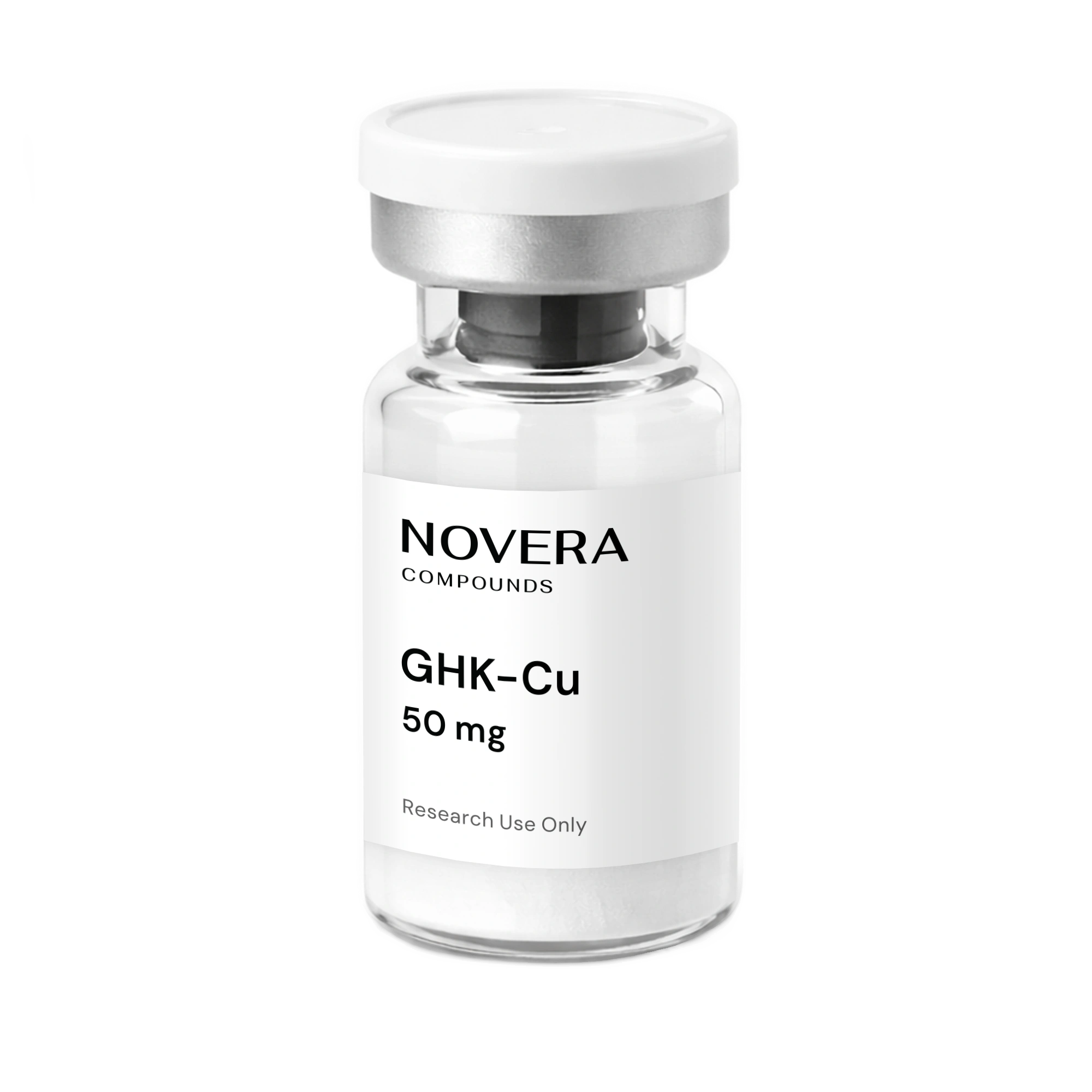
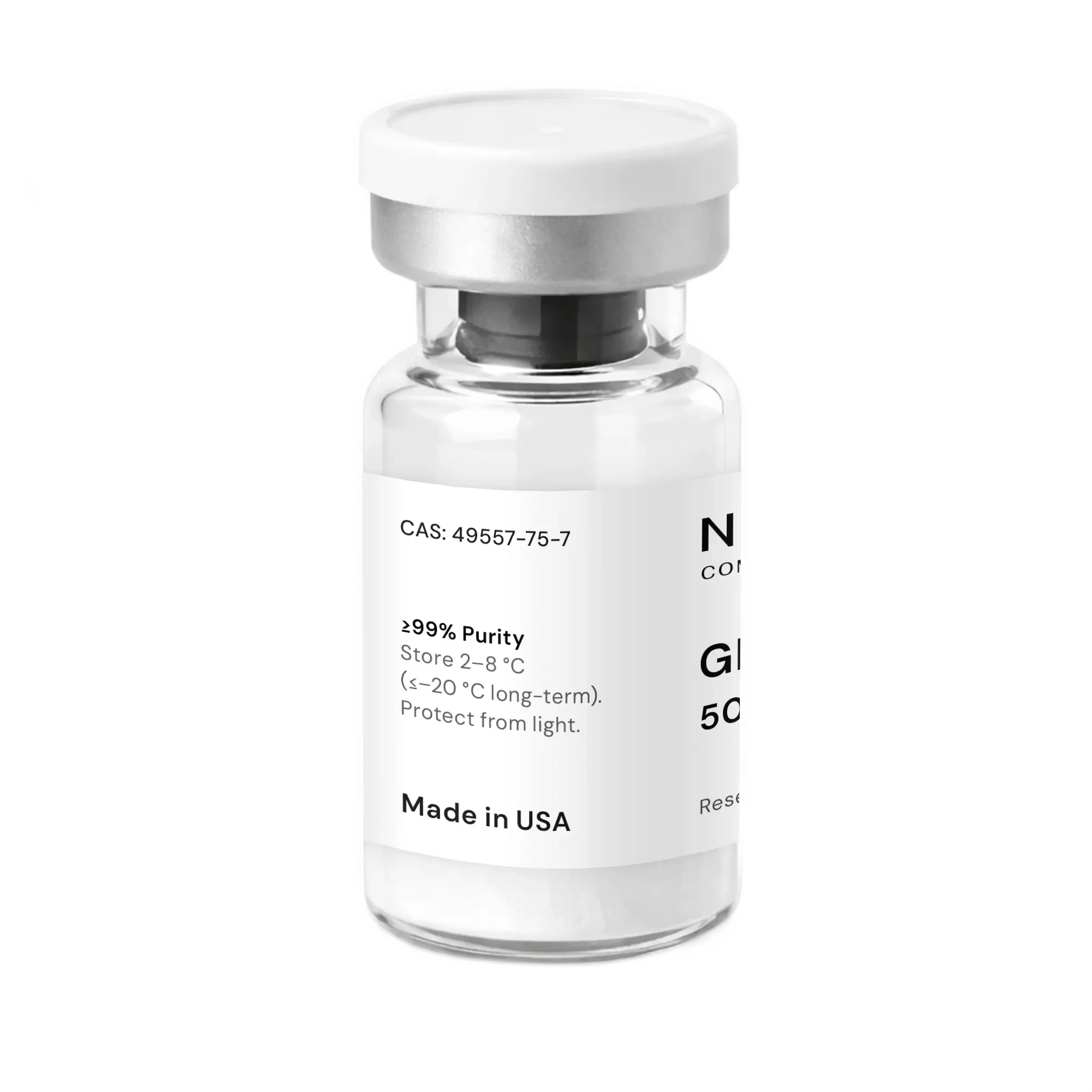
GHK-Cu 50mg
Ambient shipping · Express available · 28-day delivery guarantee
Bulk pricing. Buy 6 or more vials and save up to 26% — pick a quantity tier above.
99% Purity Guarantee
Each peptide batch is tested and verified to meet or exceed 98–99% purity (HPLC).
Storage Handling Notice
Store 2–8 °C (≤–20 °C long-term). RT exposure during transport acceptable. Protect from light.
Certificate of Analysis (COA)
Sign in to view lab results →Tested for: Purity (HPLC). Lab result PDFs are listed below for signed-in researchers.
Batch tests: Purity, Endotoxins
1 lab report available to signed-in researchers.
For research and laboratory use only. Not for human or animal consumption.
Product overview
GHK-Cu (50mg) is a research-grade copper–tripeptide complex supplied for controlled in vitro laboratory investigation. The compound consists of a defined three–amino acid sequence coordinated with a copper (II) ion. Each batch is manufactured under GMP-controlled conditions and verified by Certificate of Analysis (COA) confirming identity and purity.
This product is designated exclusively for research use.
Research focus
GHK-Cu is categorized within copper-binding peptide research and extracellular signaling pathway investigation.
Published in vitro research involving GHK-Cu has examined:
- Copper ion coordination chemistry
- Protein–metal interaction models
- Matrix metalloproteinase (MMP) activity profiling
- TGF-beta–associated signaling assays
- Oxidative stress marker analysis in controlled cell systems
These investigations are conducted in defined laboratory environments and focus on molecular interaction and pathway characterization. No organism-level or therapeutic implications are represented.
Methodological notes
GHK-Cu (50mg) is supplied in lyophilized form. Lyophilized means freeze-dried to maintain structural stability.
Store at 2–8°C in a dry, light-protected environment. Avoid repeated freeze–thaw cycles after reconstitution.
Reconstitution and handling must be performed using sterile laboratory techniques consistent with institutional research protocols.
This compound is intended strictly for in vitro laboratory investigation by qualified personnel.
Quality & sourcing
Each batch undergoes documented analytical verification, including:
- High-performance liquid chromatography (HPLC) purity testing
- Mass spectrometry molecular weight confirmation
- Amino acid sequence verification
- Batch traceability documentation
Endotoxin testing (LAL method) is available upon request for cell-based research applications.
All analytical data are provided in a batch-specific Certificate of Analysis to support institutional compliance requirements.
Chemical properties
- CAS: 49557-75-7
- Chemical Formula: C₁₄H₂₁N₆O₄Cu
- Molecular Weight: 401.91 g/mol
- Peptide Sequence: Gly-His-Lys(Cu2+)
- Synonyms: Copper peptide, GHK, Tripeptide, ghkcu, GHK-Cu acetate, Gly-His-Lys-Cu(II)
- Classification: Copper-coordinated tripeptide
- Peptide sequence: Glycyl-L-histidyl-L-lysine
- Complex form: Copper (II) coordinated structure
- Molecular format: Lyophilized powder
- Purity: ≥99% (HPLC verified)
- Molecular identity: Confirmed by mass spectrometry
- Shelf life: 24 months from the manufacturing date.
The histidine residue facilitates copper coordination, forming a stable molecular complex suitable for biochemical investigation.
Research & Education Tool
Peptide Dosage Calculator
Enter the vial amount, diluent volume, and target amount to estimate concentration, draw volume on a 1 mL U-100 syringe, and approximate vial yield.
For research and educational use only. Check all values against the product label, certificate of analysis, and any applicable professional guidance before relying on the result.
mg
Concentration
-
mcg / mL
Volume per Dose
-
-
Estimated Draws / Vial
-
rounded down to whole draws
Draw Reference
Enter values to estimate the syringe mark.
0
-
-
-
-
Express Tracked Shipping — $25
Prices:
- Flat $25 per order
- Ambient shipping, safe for lyophilized peptides
Regular Tracked Shipping — $15
Delivery in 5–10 days
Prices:
- Flat $15 per order
- Free on monthly Build a Box orders
Is GHK-Cu (50mg) intended for clinical use?
No. This compound is supplied strictly as a research-use biochemical reagent.
What documentation accompanies the product?
Each batch includes a Certificate of Analysis confirming molecular identity, purity, and analytical verification results.
In what research domains does GHK-Cu typically appear?
GHK-Cu appears in literature involving copper-binding peptide chemistry, extracellular matrix–associated signaling models, and controlled oxidative pathway studies conducted in vitro.
Is this product approved for human or veterinary administration?
No. It is designated exclusively for laboratory research use.
You Might Also Like
Related Articles

Natural Remedies for Erectile Dysfunction: What Works and What’s Overhyped
February 6, 2026 · Articles

How Age Affects Erectile Function: What’s Normal at Every Decade
February 6, 2026 · Articles

Erectile Dysfunction After Prostate Treatment: What You Should Expect
February 6, 2026 · Articles

Performance Anxiety vs Erectile Dysfunction: How to Tell Them Apart
February 6, 2026 · Articles