Delivery in 3–5 days
Lab tested · every batch
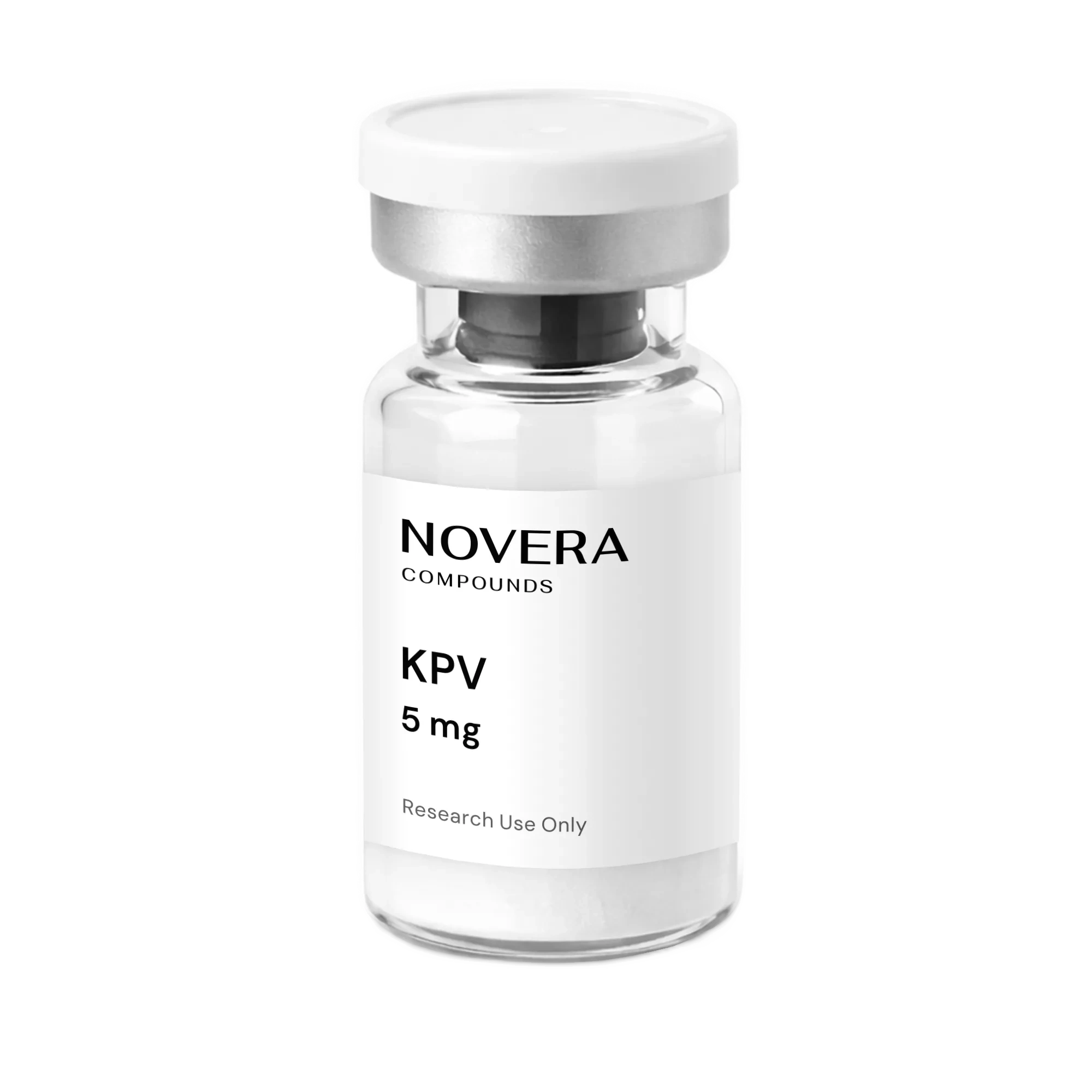
KPV 5mg
Ambient shipping · Express available · 28-day delivery guarantee
Bulk pricing. Buy 6 or more vials and save up to 26% — pick a quantity tier above.
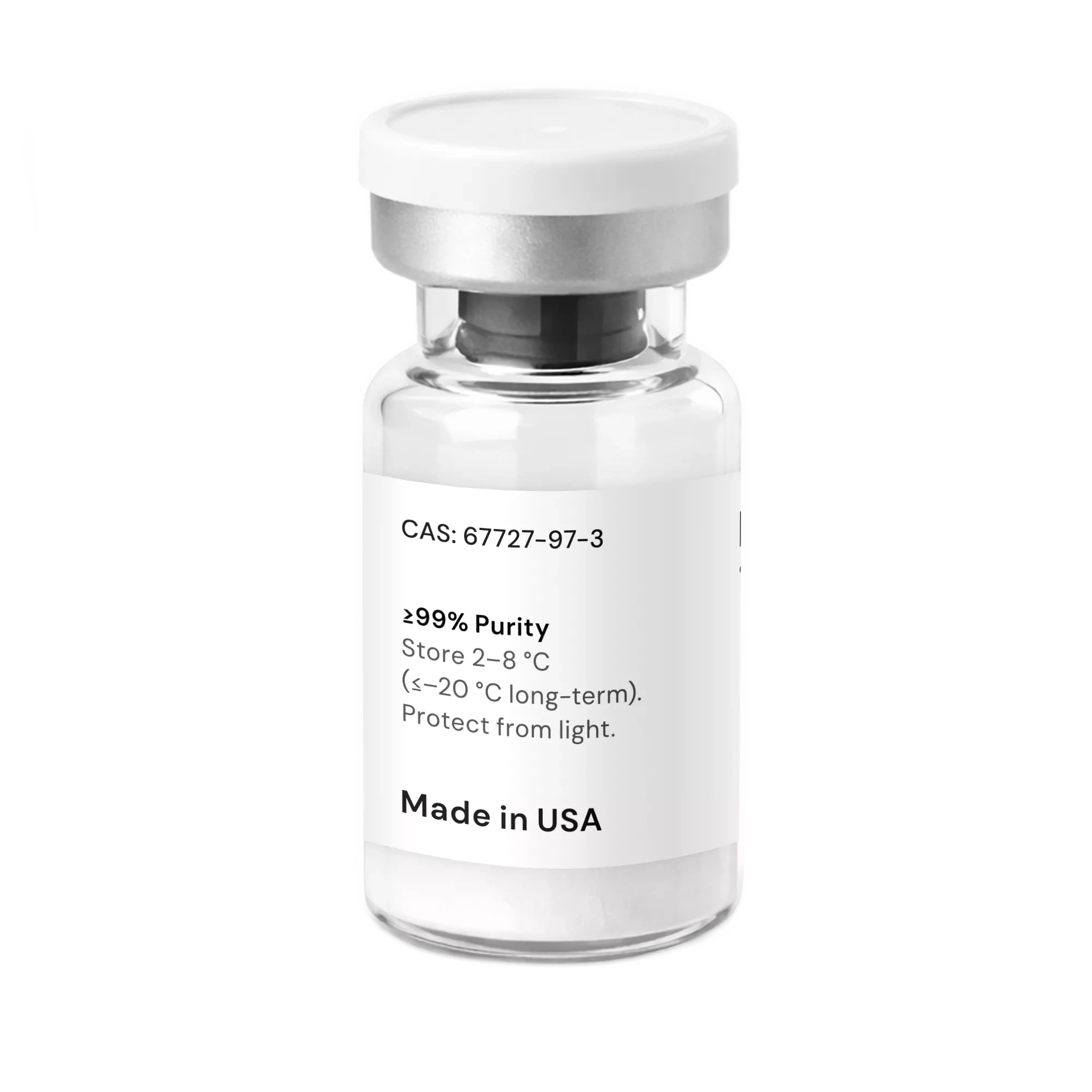
99% Purity Guarantee
Each peptide batch is tested and verified to meet or exceed 98–99% purity (HPLC).
Storage Handling Notice
Store 2–8 °C (≤–20 °C long-term). RT exposure during transport acceptable. Protect from light.
Certificate of Analysis (COA)
Sign in to view lab results →Tested for: Purity (HPLC). Lab result PDFs are listed below for signed-in researchers.
1 lab report available to signed-in researchers.
For research and laboratory use only. Not for human or animal consumption.
Buy KPV peptide online through our secure research supply platform designed for institutional procurement. When you order KPV peptide online, the process accommodates laboratory purchasing requirements and documentation needs. Our platform allows researchers to buy KPV peptide with confidence in product quality and delivery reliability. Order KPV peptide directly for your research facility with discreet and secure shipping. This product is furnished for in-vitro studies only and is not for human consumption. Not approved by regulatory agencies to prevent, treat, or cure any medical condition. Bodily introduction into humans or animals is strictly forbidden by law. The secure ordering process protects institutional information and research project confidentiality. Reliable delivery ensures research compounds arrive intact and ready for laboratory storage.
Product overview
Researchers investigate KPV peptide within controlled laboratory environments to examine tripeptide fragment properties and molecular mechanisms. Experimental pathway models utilize this compound to study short-chain peptide interactions in vitro. Controlled laboratory peptide stability studies assess compound characteristics under standardized experimental conditions. Scientists explore structural attributes of three-amino-acid sequences in research settings. Laboratory personnel examine tripeptide behavior in experimental models designed for peptide fragment research. These investigations occur exclusively in controlled research environments without clinical applications.
Research focus
KPV peptide is investigated in research environments to understand tripeptide fragment mechanisms. This compound is studied within controlled laboratory models examining short-chain peptide properties. Researchers explore this peptide for experimental peptide research applications in academic and institutional settings. Laboratory studies examine the compound’s molecular characteristics under standardized protocols. Scientists investigate structural properties relevant to tripeptide fragment research methodologies. All research applications remain confined to laboratory environments and experimental frameworks.
Methodological notes
Store KPV peptide in cool, dry conditions protected from light exposure. Storage temperature should remain consistent to maintain compound stability. Keep the product sealed until ready for laboratory use. Laboratory handling should occur only by qualified research personnel trained in peptide research protocols. Avoid exposure to moisture, heat, and direct sunlight during storage. Use appropriate laboratory equipment when handling this research compound. Reconstitution should follow standard laboratory peptide preparation procedures using sterile techniques. Maintain proper documentation of handling and storage conditions for research records. Dispose of unused material according to institutional laboratory waste protocols.
Quality & sourcing
Each batch undergoes comprehensive purity verification procedures to confirm research-grade quality. Third-party testing validates compound purity at 99%+ by HPLC analysis. Batch-to-batch consistency ensures reliable results across research protocols. Certificate of Analysis accompanies each order documenting purity verification results. Internal quality assurance standards maintain strict compound specifications. Testing procedures verify molecular weight, purity percentage, and compound identity. Research-grade supply positioning ensures suitability for controlled laboratory investigations. Quality control documentation supports institutional research compliance requirements.
Chemical properties
- CAS: 67727-97-3
- Chemical Formula: C₁₆H₃₀N₄O₄
- Molecular Weight: 342.43 g/mol
- Peptide Sequence: Lys-Pro-Val
- Synonyms: Lysine Proline Valine
- Shelf life: 24 months from the manufacturing date.
KPV peptide is a synthetic tripeptide compound produced for research applications. A tripeptide is a peptide chain consisting of three amino acids linked together. This specific sequence contains lysine, proline, and valine amino acids arranged in that order. Peptide fragments are shorter segments of amino acid chains studied for their structural properties. These fragments are investigated in laboratory research because they help scientists understand how specific amino acid sequences contribute to molecular properties. This synthetic peptide origin ensures batch-to-batch consistency for research protocols. The compound represents a defined three-amino-acid sequence designed for experimental study. Researchers examine this tripeptide’s properties within controlled laboratory conditions without therapeutic context.
Key features
This synthetic research tripeptide formulation delivers a standardized three-amino-acid compound for experimental investigations. The compact 5mg format supports controlled research applications in qualified laboratory environments. Each batch undergoes rigorous purity verification to ensure consistency across research protocols. High-purity formulation meets research-grade standards for tripeptide fragment studies. Secure packaging protects compound integrity during storage and transport. Discreet shipment ensures confidential delivery to research facilities and institutional laboratories.
Research & Education Tool
Peptide Dosage Calculator
Enter the vial amount, diluent volume, and target amount to estimate concentration, draw volume on a 1 mL U-100 syringe, and approximate vial yield.
For research and educational use only. Check all values against the product label, certificate of analysis, and any applicable professional guidance before relying on the result.
mg
Concentration
-
mcg / mL
Volume per Dose
-
-
Estimated Draws / Vial
-
rounded down to whole draws
Draw Reference
Enter values to estimate the syringe mark.
0
-
-
-
-
Express Tracked Shipping — $25
Prices:
- Flat $25 per order
- Ambient shipping, safe for lyophilized peptides
Regular Tracked Shipping — $15
Delivery in 5–10 days
Prices:
- Flat $15 per order
- Free on monthly Build a Box orders
What is KPV and where does its sequence originate?
KPV is a tripeptide (Lys-Pro-Val) derived from the C-terminal sequence of alpha-melanocyte stimulating hormone (α-MSH). It corresponds to the 11-13 residues of α-MSH and is studied in research models as a functional fragment that retains some of the signalling properties of the parent melanocortin peptide, particularly those related to anti-inflammatory pathway modulation.
What receptors has KPV been investigated for in research?
KPV has been studied in research models for potential interactions with melanocortin receptors — particularly MC1R and MC3R — and with intracellular inflammatory pathway components. Its small size relative to full-length α-MSH means it likely has different binding dynamics at these receptors. Research has also examined potential interactions with gut epithelial cells and immune cell populations, where inflammatory signalling pathway modulation has been reported in preclinical studies.
What in vitro models are used to study KPV?
Standard in vitro research models for KPV include macrophage and dendritic cell lines stimulated with pro-inflammatory mediators (LPS, TNF-α), intestinal epithelial cell lines used to study barrier function and inflammatory signalling, and reporter gene assays for NF-κB pathway activation. These models allow the compound’s effects on defined inflammatory signalling endpoints to be characterised under controlled conditions.
How should KPV be stored and reconstituted?
KPV is supplied as a lyophilised powder and should be stored at -20°C. Due to its small molecular weight (approximately 340 Da), it is generally highly water-soluble. Reconstitution in sterile water or PBS is standard. Solutions should be aliquoted to avoid repeated freeze-thaw and stored at -80°C for extended use.
Is KPV for human use?
KPV as supplied by Elivena is for research use in controlled laboratory settings only. It is not approved for human therapeutic, dietary supplement, or clinical administration outside of formally regulated research contexts.