Delivery in 3–5 days
Lab tested · every batch
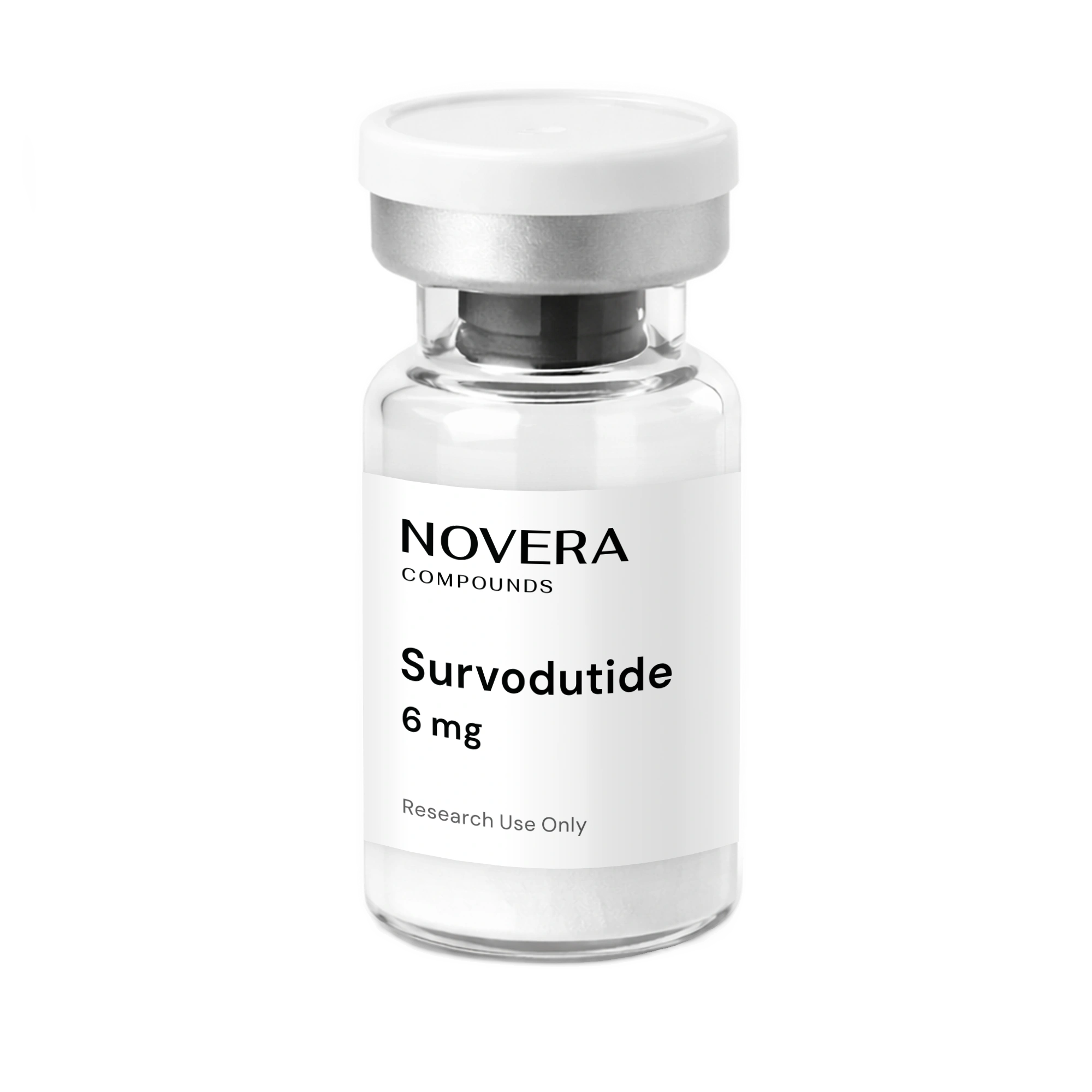
Survodutide 6mg
Ambient shipping · Express available · 28-day delivery guarantee
Bulk pricing. Buy 6 or more vials and save up to 26% — pick a quantity tier above.
99% Purity Guarantee
Each peptide batch is tested and verified to meet or exceed 98–99% purity (HPLC).
Storage Handling Notice
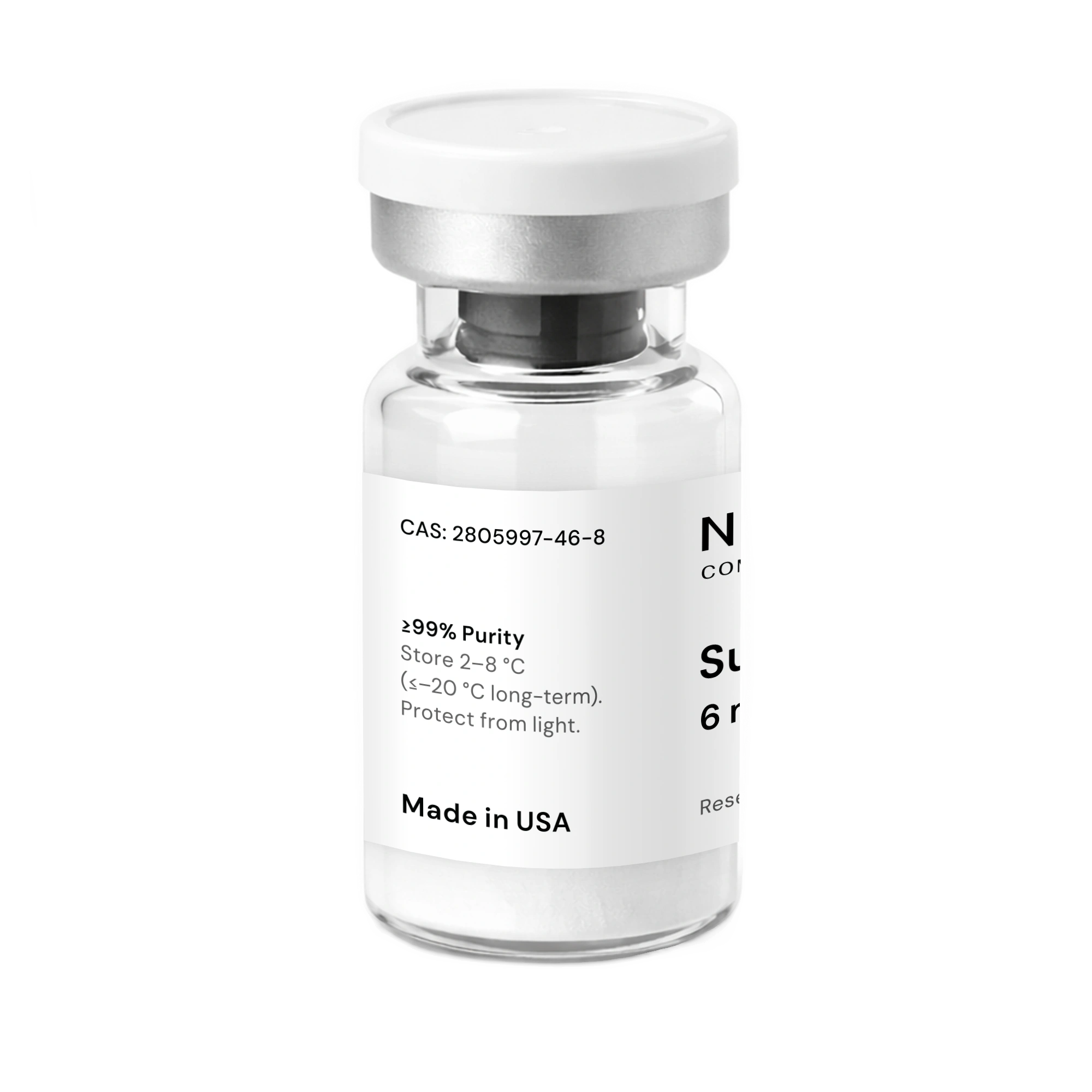
Store 2–8 °C (≤–20 °C long-term). RT exposure during transport acceptable. Protect from light.
Certificate of Analysis (COA)
Sign in to view lab results →Tested for: Purity (HPLC). Lab result PDFs are listed below for signed-in researchers.
1 lab report available to signed-in researchers.
For research and laboratory use only. Not for human or animal consumption.
Survodutide 6mg from Novera provides research teams with a GMP-manufactured, COA-verified next-generation dual GLP-1/glucagon receptor agonist for advanced preclinical metabolic signaling pathway, hepatic lipid metabolism marker, and comparative dual-agonist receptor pharmacology studies. Produced by USA-certified facilities to approximately 99% purity, each vial delivers consistently characterized next-generation dual-agonist material with full batch documentation supporting institutional compliance requirements. Global secure shipping is available for laboratory orders. Every order includes COA documentation, handling instructions, and dedicated technical support for multi-phase dual-agonist receptor signaling experimental protocol design.
Product overview
Survodutide 6mg is suited for research teams investigating next-generation dual GLP-1/glucagon receptor agonist pharmacology, optimized receptor activation ratio dynamics, and hepatic lipid metabolism signaling pathway endpoint quantification in controlled preclinical models. Laboratories studying GLP-1 and glucagon receptor co-activation interaction effects, hepatic steatosis signaling pathway marker characterization, or comparative dual-agonist receptor occupancy dynamics relative to first-generation compounds will find Survodutide relevant to mechanistic study designs. Research programs examining GLP-1/glucagon receptor ratio optimization and its downstream consequences on metabolic pathway marker expression use Survodutide as a structurally refined next-generation reference compound. Produced in USA GMP-certified facilities, each vial is COA-verified for purity and sequence identity to approximately 99%.
Research focus
Dual Receptor Pharmacology and Binding Kinetics
Survodutide supports in-vitro investigation of simultaneous GLP-1 and glucagon receptor binding kinetics, receptor occupancy dynamics, and downstream cAMP second messenger pathway activity in pancreatic and hepatic cell line experimental models. Researchers characterizing next-generation dual-agonist receptor selectivity profiles, binding affinity parameters, and receptor subtype interaction dynamics use Survodutide for comparative receptor pharmacology study designs alongside first-generation agonist reference compounds.
Hepatic Steatosis and NASH Pathway Mechanistic Studies
Laboratories investigating the molecular mechanisms underlying hepatic steatosis and NASH pathway progression use Survodutide to examine intrahepatic lipid accumulation marker dynamics, hepatic fatty acid oxidation pathway signaling activity, and fibrosis-associated molecular marker expression in preclinical liver model systems. Research quantifying the effect of dual GLP-1/glucagon receptor activation on these hepatic pathway endpoints contributes to mechanistic characterization of next-generation dual-agonist activity in liver signaling biology.
Comparative Dual-Agonist Receptor Signaling Studies
Survodutide’s next-generation receptor activation profile enables comparative study designs examining how GLP-1/glucagon receptor co-activation produces different downstream molecular marker patterns relative to GIP/GLP-1 dual agonists or single-receptor reference compounds. Research teams investigating the mechanistic basis for receptor ratio-dependent signaling endpoint differences use multi-arm comparative protocols to characterize the molecular consequences of distinct dual-agonist pharmacological profiles across shared downstream pathway markers.
Energy Metabolism and Hepatic Glucose Production Pathway Research
Glucagon receptor activation is studied in relation to hepatic glucose production pathway regulatory marker dynamics, including glycogenolysis signaling and gluconeogenesis pathway enzyme expression endpoints. Combined with GLP-1 receptor-mediated insulin secretion pathway activity, Survodutide enables research examining the net molecular interaction effects of simultaneous activation of these two opposing metabolic regulatory pathways in controlled preclinical hepatic and pancreatic model systems.
Methodological notes
Preparation Guidelines
Reconstitute lyophilized Survodutide 6mg with sterile bacteriostatic water using standard sterile laboratory technique. Reconstitution volume should be determined based on the target experimental working concentration specified by the study design. The 6mg vial supports single-dose or divided experimental administration series depending on protocol concentration requirements. Use calibrated laboratory equipment for all preparation steps and document reconstitution in accordance with institutional research record-keeping standards.
Storage Conditions
Store lyophilized peptide at 2–8°C, protected from light and moisture, prior to reconstitution. Following reconstitution, maintain strict refrigeration at 2–8°C to preserve dual-agonist peptide integrity. Cold-chain shipping is not required, but immediate refrigeration upon receipt is recommended. Each vial is supplied with COA documentation and handling guidance. Reconstituted peptide remains stable for several weeks under appropriate refrigeration conditions.
Protocol Duration Guidelines
Preclinical metabolic and hepatic signaling pathway studies using Survodutide typically span 24–48 weeks for comprehensive dual-agonist receptor characterization and hepatic pathway marker progression observation. Measurable molecular endpoint changes in preclinical models may be observed within 8–12 weeks, with more comprehensive pathway characterization data emerging by weeks 20–28. Monitor GLP-1 and glucagon receptor pathway markers, hepatic lipid metabolism signaling endpoints, and comparative dual-agonist molecular marker expression at defined experimental intervals throughout the observation period.
Quality & sourcing
USA GMP Manufacturing
Produced in USA GMP-certified facilities to approximately 99% purity, each vial is independently verified by COA documentation confirming peptide sequence identity, dual-agonist activity profile, purity grade, and batch-specific quality control data. This level of characterization provides research laboratories with consistent, pharmaceutical-grade next-generation dual-agonist material for advanced metabolic signaling pathway investigations.
Chemical properties
- CAS: 2805997-46-8
- Chemical Formula: C₁₉₂H₂₈₉N₄₇O₆₁
- Molecular Weight: 4231.63 g/mol
- Peptide Sequence: His-{1-Aminocyclobutanecarboxylic acid}-Gln-Gly-Thr-Phe-Thr-Ser-Asp-Tyr-Ser-Lys-Tyr-Leu-Asp-Glu-Arg-Ala-Ala-Lys-Asp-Phe-Ile-{Lys(Gly-Ser-Gly-Ser-Gly-Gly-γGlu-C18 diacid)}-Trp-Leu-Glu-Ser-Ala-NH2
- Synonyms: BI 456906
- Shelf life: 24 months from the manufacturing date.
Key features
Next-Generation Dual GLP-1/Glucagon Receptor Agonist Profile
Survodutide is a next-generation dual receptor agonist designed with an optimized GLP-1/glucagon receptor activation ratio, distinguishing it from earlier dual-agonist compounds such as Tirzepatide, which co-activates GIP and GLP-1 receptors. By engaging both GLP-1 and glucagon receptors simultaneously, Survodutide enables researchers to examine the downstream signaling consequences of combined incretin and glucagon pathway activation on hepatic lipid metabolism markers, energy expenditure pathway signaling, and glucose homeostasis endpoint dynamics in controlled preclinical metabolic model systems.
Optimized Receptor Activation Ratio Research
The GLP-1/glucagon receptor activation ratio in Survodutide has been refined relative to first-generation dual-agonist compounds, making it a relevant model for studying how receptor activation balance influences downstream signaling pathway interaction dynamics. Researchers examining the quantitative relationship between GLP-1 receptor-mediated incretin signaling and glucagon receptor-mediated hepatic glucose production pathway activity use Survodutide’s defined activation profile to characterize receptor ratio-dependent molecular endpoint differences in comparative preclinical study designs.
Hepatic Lipid Metabolism Signaling Pathway Research
Survodutide’s glucagon receptor activation component makes it relevant for studies examining hepatic lipid oxidation pathway signaling marker expression, fatty acid beta-oxidation regulatory endpoint activity, and intrahepatic lipid accumulation marker dynamics in preclinical liver model systems. Laboratories investigating NASH and NAFLD pathway mechanisms, specifically hepatic steatosis signaling, fibrosis-associated molecular marker expression, and hepatocyte lipid regulatory pathway activity, use Survodutide as a next-generation dual-agonist tool compound for advanced mechanistic characterization.
USA GMP Manufacturing
Produced in USA GMP-certified facilities to approximately 99% purity, each vial is independently verified by COA documentation confirming peptide sequence identity, dual-agonist activity profile, purity grade, and batch-specific quality control data. This level of characterization provides research laboratories with consistent, pharmaceutical-grade next-generation dual-agonist material for advanced metabolic signaling pathway investigations.
Research & Education Tool
Peptide Dosage Calculator
Enter the vial amount, diluent volume, and target amount to estimate concentration, draw volume on a 1 mL U-100 syringe, and approximate vial yield.
For research and educational use only. Check all values against the product label, certificate of analysis, and any applicable professional guidance before relying on the result.
mg
Concentration
-
mcg / mL
Volume per Dose
-
-
Estimated Draws / Vial
-
rounded down to whole draws
Draw Reference
Enter values to estimate the syringe mark.
0
-
-
-
-
Express Tracked Shipping — $25
Prices:
- Flat $25 per order
- Ambient shipping, safe for lyophilized peptides
Regular Tracked Shipping — $15
Delivery in 5–10 days
Prices:
- Flat $15 per order
- Free on monthly Build a Box orders
How does Survodutide's receptor activation profile differ from first-generation dual agonists?
Survodutide co-activates GLP-1 and glucagon receptors with an optimized activation ratio, distinguishing it from first-generation dual agonists such as Tirzepatide, which targets GIP and GLP-1 receptors. The inclusion of glucagon receptor agonism introduces hepatic lipid oxidation pathway signaling dynamics not present in GIP/GLP-1 dual-agonist study designs, enabling researchers to characterize the molecular consequences of this distinct receptor combination in comparative preclinical metabolic models.
Why is glucagon receptor activation relevant to hepatic steatosis and NASH pathway research?
Glucagon receptor signaling is studied in relation to hepatic lipid oxidation regulatory pathway activity, fatty acid beta-oxidation enzyme expression, and intrahepatic lipid accumulation marker dynamics. In NASH and NAFLD preclinical model systems, glucagon receptor pathway activity is investigated as a mechanistic contributor to hepatic lipid metabolism endpoint regulation, making Survodutide’s refined glucagon receptor activation component particularly relevant to next-generation hepatic signaling pathway mechanistic research.
Can Survodutide be incorporated into combination preclinical research protocols?
Survodutide may be included in combination study designs alongside other metabolic pathway research compounds to investigate additive or interactive effects on dual receptor signaling pathway marker activity. Combination protocol design should be based on receptor system compatibility and endpoint selection, with experimental complexity managed in accordance with institutional laboratory standards and mechanistic study objectives.