Delivery in 3–5 days
Lab tested · every batch
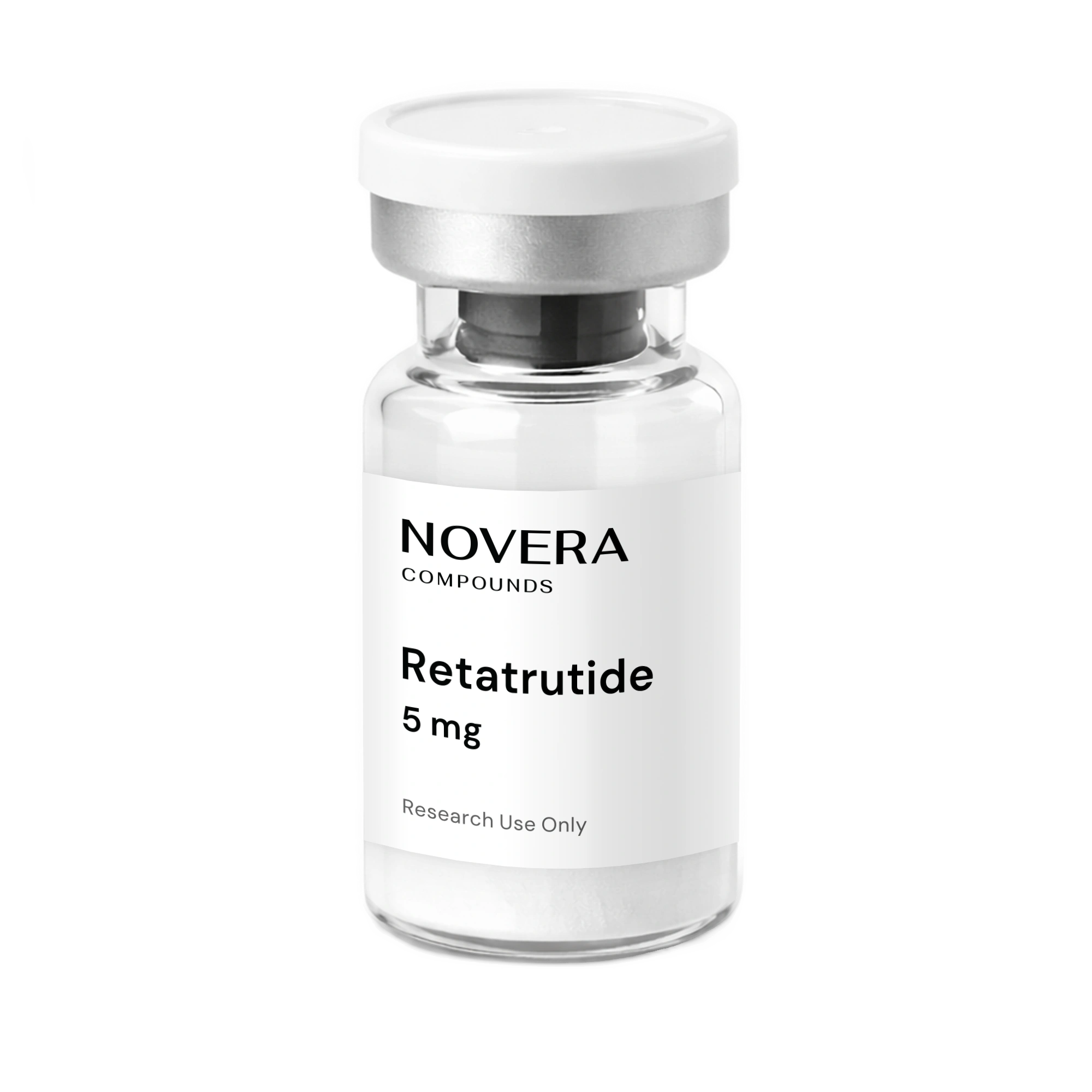
Retatrutide 5mg
Ambient shipping · Express available · 28-day delivery guarantee
Bulk pricing. Buy 6 or more vials and save up to 26% — pick a quantity tier above.
99% Purity Guarantee
Each peptide batch is tested and verified to meet or exceed 98–99% purity (HPLC).
Storage Handling Notice
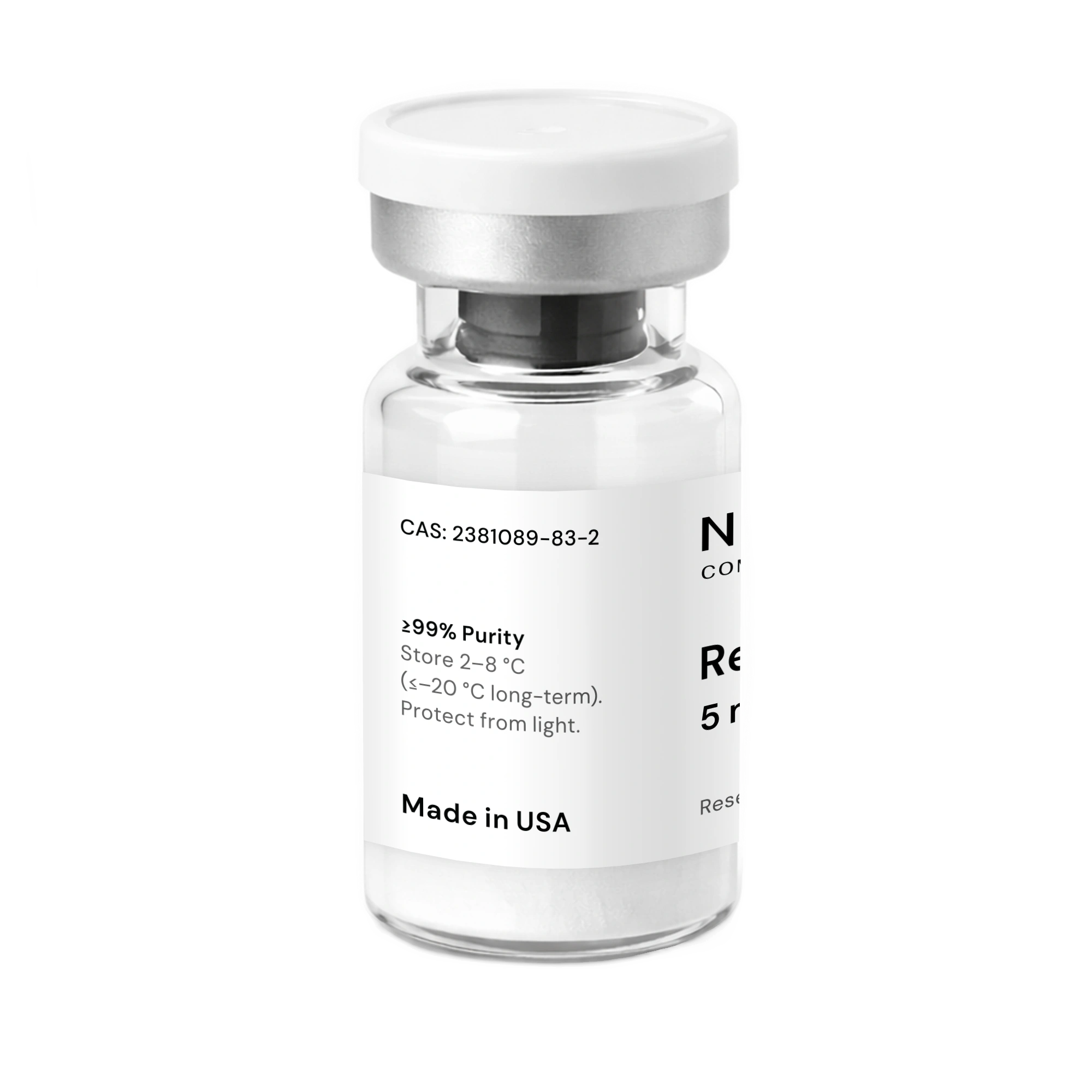
Store 2–8 °C (≤–20 °C long-term). RT exposure during transport acceptable. Protect from light.
Certificate of Analysis (COA)
Sign in to view lab results →Tested for: Purity (HPLC). Lab result PDFs are listed below for signed-in researchers.
Batch tests: Purity, Endotoxins
4 lab reports available to signed-in researchers.
For research and laboratory use only. Not for human or animal consumption.
Retatrutide 5mg provides research teams with a COA-verified, USA GMP-sourced triple GIP/GLP-1/glucagon receptor agonist for preclinical receptor pharmacology and comparative signaling pathway research. Each vial delivers consistently characterized peptide material with full batch documentation. Global secure shipping is available for laboratory orders.
Product overview
Retatrutide 5mg is suited for research teams and receptor pharmacology laboratories investigating triple-agonist receptor interaction behavior, GIP/GLP-1/glucagon receptor co-activation dynamics, and comparative molecular signaling differences between tri-receptor and dual-agonist reference compounds in controlled preclinical models. Scientists examining simultaneous activation of multiple receptor systems and its downstream effects on shared intracellular signaling pathway markers will find Retatrutide relevant to mechanistic multi-arm study designs.
Research programs requiring a structurally defined triple-agonist reference compound for comparative receptor pharmacology investigations alongside dual-agonist compounds benefit from Retatrutide’s distinct tri-receptor activation profile. Retatrutide 5mg is supplied from USA GMP-certified manufacturing facilities, with each vial COA-verified for purity and sequence identity to approximately 99%.
Research focus
Triple Receptor Binding Kinetics and Occupancy Studies
Retatrutide supports in-vitro investigation of simultaneous GIP, GLP-1, and glucagon receptor binding kinetics, receptor occupancy dynamics, and downstream cAMP pathway activity across experimental cell models. Researchers characterizing tri-receptor selectivity profiles and receptor interaction parameters use Retatrutide as a reference compound for triple-agonist receptor pharmacology studies.
Downstream cAMP Signaling Cascade Characterization
Laboratories studying tri-receptor signal transduction use Retatrutide to quantify downstream intracellular signaling marker activity across all three receptor systems in controlled experimental models. Multi-arm protocols comparing triple-agonist and dual-agonist signaling profiles support mechanistic characterization of how additional receptor engagement contributes to observed molecular signaling patterns.
Comparative Tri-Receptor vs. Dual-Agonist Molecular Endpoint Studies
Retatrutide’s triple receptor activation profile enables comparative study designs examining how tri-receptor co-activation produces distinct intracellular signaling pathway marker patterns relative to dual-agonist compounds. Research quantifying molecular endpoint differences between tri-receptor and dual-receptor engagement contributes to mechanistic understanding of receptor combination–dependent signaling biology.
Hepatic and Pancreatic Signaling Pathway Marker Research
Glucagon receptor engagement is studied in relation to receptor-mediated intracellular signaling pathways and downstream molecular marker expression in hepatic and pancreatic experimental models. Combined with GIP and GLP-1 receptor engagement, Retatrutide enables research examining integrated receptor signaling interactions within controlled preclinical systems without reference to physiological or clinical outcomes.
Methodological notes
Preparation Guidelines
Reconstitute lyophilized Retatrutide 5mg with sterile bacteriostatic water using standard sterile laboratory technique. Reconstitution volume should be determined based on the target experimental working concentration specified by the study design. Document each preparation step in accordance with institutional research record-keeping standards. Use calibrated laboratory equipment throughout all preparation steps.
Storage Conditions
Store lyophilized peptide at 2–8°C, protected from light and moisture, prior to reconstitution. Following reconstitution, maintain refrigeration at 2–8°C in accordance with institutional laboratory handling standards. Each vial includes COA documentation and handling guidance.
Protocol Duration Guidelines
Preclinical receptor signaling studies using Retatrutide may span variable durations depending on experimental objectives, receptor systems under investigation, and molecular markers selected for analysis. Sampling cadence, observation intervals, and endpoint selection should be defined by the study design and institutional laboratory standards.
Quality & sourcing
USA GMP-Certified Supply
Retatrutide 5mg is supplied from USA GMP-certified manufacturing facilities and independently verified to approximately 99% purity by third-party COA documentation. Each vial confirms peptide sequence identity, purity grade, and batch-specific quality control data, providing research laboratories with consistent, pharmaceutical-grade triple-agonist material for advanced receptor signaling research.
Chemical properties
- CAS: 2381089-83-2
- Chemical Formula: C₂₂₁H₃₄₂N₄₆O₆₈
- Molecular Weight: 4845.444 g/mol
- Peptide Sequence: Tyr-{Aib}-Gln-Gly-Thr-Phe-Thr-Ser-Asp-Tyr-Ser-Ile-{α-Me-Leu}-Leu-Asp-Lys-{diacid-C20-gamma-Glu-(AEEA)-Lys}-Ala-Gln-{Aib}-Ala-Phe-Ile-Glu-Tyr-Leu-Leu-Glu-Gly-Gly-Pro-Ser-Ser-Gly-Ala-Pro-Pro-Pro-Ser-NH2 (Sodium salt)
- Synonyms: Retatrutide acetate, LY3437943
- Shelf life: 24 months from the manufacturing date.
Key features
Triple Receptor Co-Activation Profile
Retatrutide simultaneously engages three G-protein-coupled receptors: the GIP receptor, the GLP-1 receptor, and the glucagon receptor. Each receptor system initiates distinct cAMP-mediated intracellular signaling cascades that can be studied individually or in combination within controlled experimental models. Simultaneous tri-receptor co-activation enables researchers to examine receptor interaction dynamics, signaling pathway integration behavior, and comparative molecular marker patterns relative to dual-agonist reference compounds.
Next-Generation Comparative Receptor Pharmacology Tool
Retatrutide’s triple receptor activation profile positions it as a mechanistically distinct tool compound for comparative receptor pharmacology study designs. Researchers examining how the addition of a third receptor system modifies downstream signaling pathway dynamics, receptor occupancy parameters, and shared intracellular signaling markers use Retatrutide alongside dual-agonist reference compounds in multi-arm comparative research protocols. This supports systematic molecular characterization of receptor combination–dependent signaling behavior.
USA GMP-Certified Supply
Retatrutide 5mg is supplied from USA GMP-certified manufacturing facilities and independently verified to approximately 99% purity by third-party COA documentation. Each vial confirms peptide sequence identity, purity grade, and batch-specific quality control data, providing research laboratories with consistent, pharmaceutical-grade triple-agonist material for advanced receptor signaling research.
Research & Education Tool
Peptide Dosage Calculator
Enter the vial amount, diluent volume, and target amount to estimate concentration, draw volume on a 1 mL U-100 syringe, and approximate vial yield.
For research and educational use only. Check all values against the product label, certificate of analysis, and any applicable professional guidance before relying on the result.
mg
Concentration
-
mcg / mL
Volume per Dose
-
-
Estimated Draws / Vial
-
rounded down to whole draws
Draw Reference
Enter values to estimate the syringe mark.
0
-
-
-
-
Express Tracked Shipping — $25
Prices:
- Flat $25 per order
- Ambient shipping, safe for lyophilized peptides
Regular Tracked Shipping — $15
Delivery in 5–10 days
Prices:
- Flat $15 per order
- Free on monthly Build a Box orders
How does Retatrutide’s receptor activation profile differ from dual-agonist compounds?
Retatrutide simultaneously engages GIP, GLP-1, and glucagon receptors, enabling investigation of tri-receptor interaction dynamics and comparative intracellular signaling behavior relative to dual-agonist reference compounds in controlled experimental models.
What concentration strategies are used in preclinical research?
Experimental concentration selection and escalation strategies should be defined by study objectives, receptor signaling dynamics, and institutional laboratory standards.
How should Retatrutide be handled after reconstitution?
Reconstituted material should be maintained under refrigerated laboratory conditions and used according to institutional handling protocols to preserve molecular integrity.