Delivery in 3–5 days
Lab tested · every batch
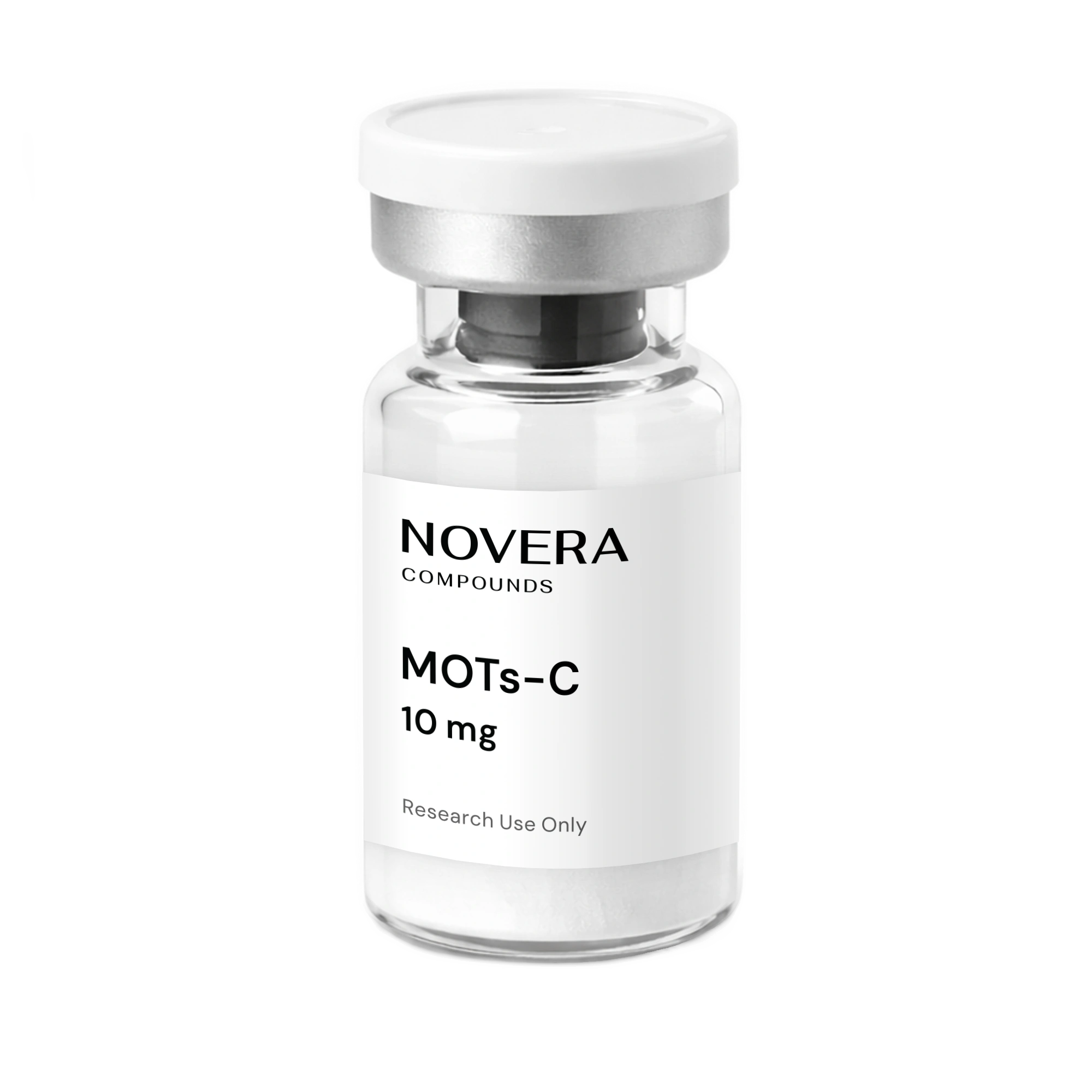
MOTs-C 10mg
Ambient shipping · Express available · 28-day delivery guarantee
Bulk pricing. Buy 6 or more vials and save up to 26% — pick a quantity tier above.
99% Purity Guarantee
Each peptide batch is tested and verified to meet or exceed 98–99% purity (HPLC).
Storage Handling Notice
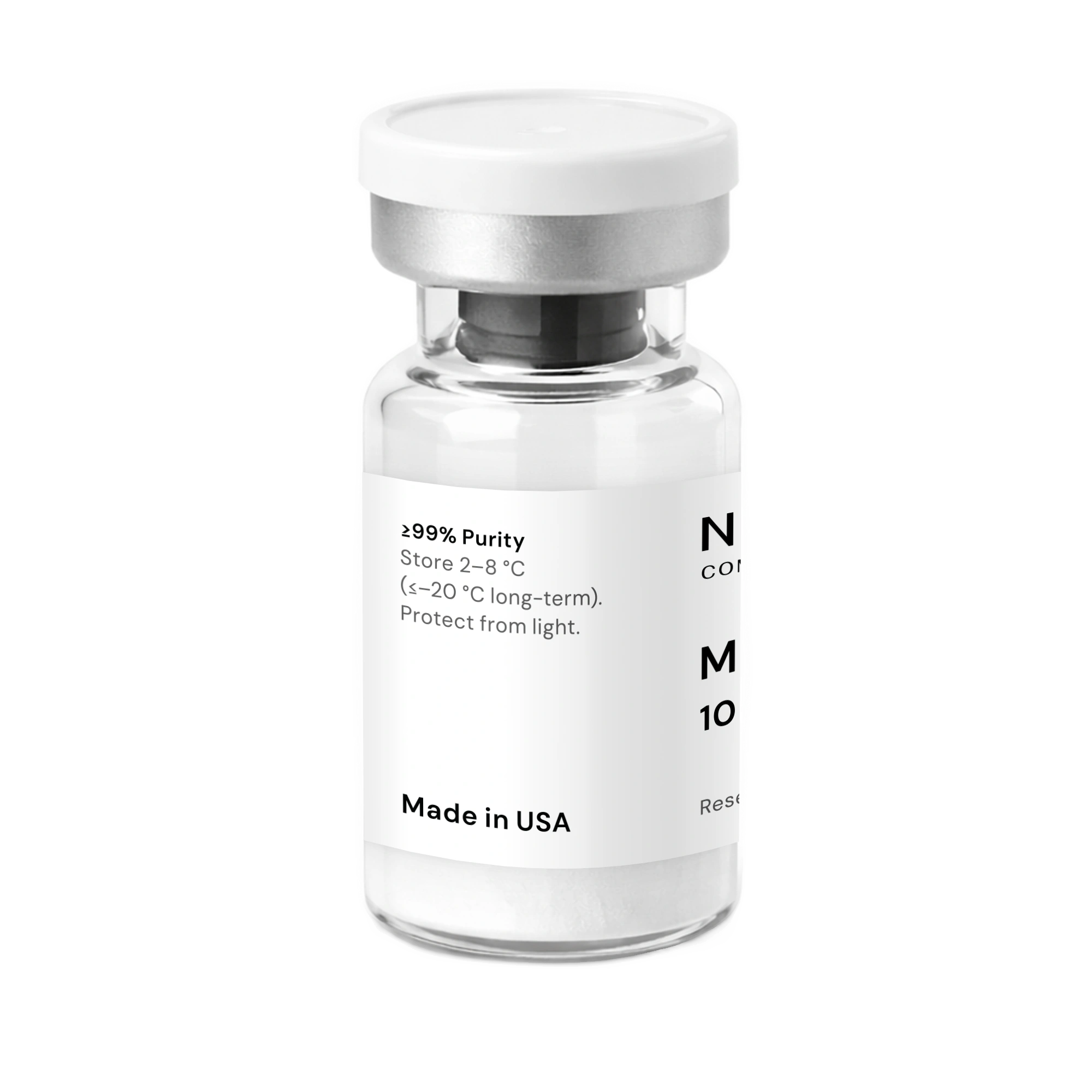
Store 2–8 °C (≤–20 °C long-term). RT exposure during transport acceptable. Protect from light.
Certificate of Analysis (COA)
Sign in to view lab results →Tested for: Purity (HPLC). Lab result PDFs are listed below for signed-in researchers.
Batch tests: Purity
1 lab report available to signed-in researchers.
For research and laboratory use only. Not for human or animal consumption.
Buy MOTs-C peptide exclusively for research applications in qualified laboratories and academic institutions. Our platform provides secure ordering processes for institutional buyers and research coordinators. We offer discreet and reliable delivery to research facilities nationwide. The formulation is available in standardized configurations to support various research requirements. When you order MOTs-C peptide through our system, complete quality documentation is included. This product cannot be sold for human consumption or veterinary applications. No prescription is required for qualified research institutions to buy MOTs-C peptide online.
Product overview
Researchers investigate mitochondrial peptide behavior using MOTs-C in experimental models. Mitochondrial peptide research examines molecules produced by cellular energy-generating organelles. Laboratory teams explore cellular energy signaling studies in controlled research settings. Energy signaling studies investigate how cells communicate information about energy status. Scientists conduct controlled experimental peptide research under various laboratory conditions. Research groups examine how mitochondrial peptides function in cellular communication systems. These studies occur exclusively in research environments without clinical applications.
Research focus
MOTs-C is investigated in research environments for mitochondrial peptide analysis. Scientists have studied this compound within controlled laboratory models using standardized protocols. The formulation is explored for experimental mitochondrial peptide research in academic facilities. Researchers evaluate the peptide under controlled conditions without outcome claims.
Methodological notes
Store MOTs-C in cool, dry, light-protected conditions between 2-8°C. Light-protected conditions mean storage away from direct sunlight and intense artificial lighting. This product is intended for laboratory handling only by qualified research personnel. Qualified personnel have received appropriate training in peptide handling and storage procedures. Avoid moisture exposure as water content can affect peptide stability and quality. Avoid heat exposure above recommended temperature ranges to maintain structural integrity. Structural integrity refers to peptides maintaining their proper molecular configuration. Reconstituted solutions should follow established laboratory guidelines specific to peptide research protocols.
Quality & sourcing
Each MOTs-C batch undergoes comprehensive purity verification procedures through analytical testing. Analytical testing uses scientific instruments to measure peptide composition and quality. Our processes ensure batch-to-batch consistency across all research supply orders. Internal quality assurance standards follow research-grade supply positioning for peptide compounds. Research-grade supply means products meet specifications required for scientific laboratory use. Testing protocols verify peptide purity and structural characteristics using validated methods. Every unit meets our specifications before receiving distribution approval. Laboratory certificates accompany each order for institutional tracking and compliance documentation.
Chemical properties
- CAS: N/A
- Chemical Formula: C₁₀₁H₁₅₂N₂₈O₂₂S₂
- Molecular Weight: 2174.64 g/mol
- Peptide Sequence: Met-Arg-Trp-Gln-Glu-Met-Gly-Tyr-Ile-Phe-Tyr-Pro-Arg-Lys-Leu-Arg
- Synonyms: Mitochondrial peptide, Mitochondria-derived peptide
- Shelf life: 24 months from the manufacturing date.
MOTs-C is a mitochondrial-derived peptide consisting of 16 amino acids in sequence. Mitochondrial-derived peptides are encoded by DNA within mitochondria rather than nuclear DNA. Mitochondria are cellular organelles responsible for generating energy in cells. Why mitochondrial peptides are studied in research relates to understanding cellular energy regulation. Energy regulation describes how cells manage their energy production and consumption. The general role of energy-related peptides in laboratory models includes serving as signaling molecules. Signaling molecules transmit information between different cellular components. Researchers investigate how this peptide interacts with cellular energy pathways. Cellular energy pathways are sequences of molecular reactions that produce usable energy.
Key features
MOTs-C provides a mitochondrial-derived research peptide developed for scientific applications. Mitochondrial-derived peptides are encoded by genetic material within cellular energy structures. Each batch undergoes high-purity testing to ensure compound consistency across orders. The formulation is designed for controlled laboratory environments conducting cellular research. Cellular research examines how molecules function within cell-based experimental systems. Secure packaging with discreet shipment protects the peptide during transit to research facilities.
Research & Education Tool
Peptide Dosage Calculator
Enter the vial amount, diluent volume, and target amount to estimate concentration, draw volume on a 1 mL U-100 syringe, and approximate vial yield.
For research and educational use only. Check all values against the product label, certificate of analysis, and any applicable professional guidance before relying on the result.
mg
Concentration
-
mcg / mL
Volume per Dose
-
-
Estimated Draws / Vial
-
rounded down to whole draws
Draw Reference
Enter values to estimate the syringe mark.
0
-
-
-
-
Express Tracked Shipping — $25
Prices:
- Flat $25 per order
- Ambient shipping, safe for lyophilized peptides
Regular Tracked Shipping — $15
Delivery in 5–10 days
Prices:
- Flat $15 per order
- Free on monthly Build a Box orders
What is MOTS-c and what is its biological origin?
MOTS-c (Mitochondrial Open Reading Frame of the 12S rRNA-c) is a 16-amino acid peptide encoded by the mitochondrial genome — specifically the 12S rRNA gene — making it part of the class of mitochondrial-derived peptides (MDPs). It is studied in research models as a mitochondria-to-nucleus and mitochondria-to-periphery signalling molecule that responds to metabolic stress. It is encoded within the small ribosomal RNA gene of the mitochondrial genome, an unusual location for a protein-coding sequence.
What signalling pathways has MOTS-c been studied for in preclinical research?
MOTS-c research has examined its effects on AMPK pathway activation in metabolic cell models, AICAR-related purine metabolite accumulation, mitochondrial biogenesis pathway signalling, and insulin sensitisation in skeletal muscle and hepatocyte research systems. Studies have also investigated its nuclear translocation in response to metabolic stress, where it reportedly interacts with promoter regions of stress-response genes to alter transcription.
What in vitro systems are used to study MOTS-c?
Standard in vitro models for MOTS-c research include L6 and C2C12 skeletal muscle cell lines for glucose uptake and AMPK activation studies, primary hepatocyte cultures for hepatic metabolic pathway analysis, and stressed cell models (H2O2, nutrient deprivation) for mitochondrial stress response characterisation. AICAR and metformin serve as reference AMPK-activating compounds in parallel assay systems.
How should MOTS-c be reconstituted and stored?
Lyophilised MOTS-c should be stored at -20°C. Reconstitution in sterile water or PBS is standard. Due to its small size (approximately 2200 Da) and moderate hydrophilicity, MOTS-c is typically soluble in aqueous buffers without organic co-solvents. Solutions should be aliquoted and stored at -80°C for extended use.
Is MOTS-c intended for human administration?
MOTS-c as supplied by Elivena is for research use in controlled laboratory settings only. It is not approved for human therapeutic, performance, or anti-ageing administration outside of formally regulated research contexts.