Delivery in 3–5 days
Lab tested · every batch
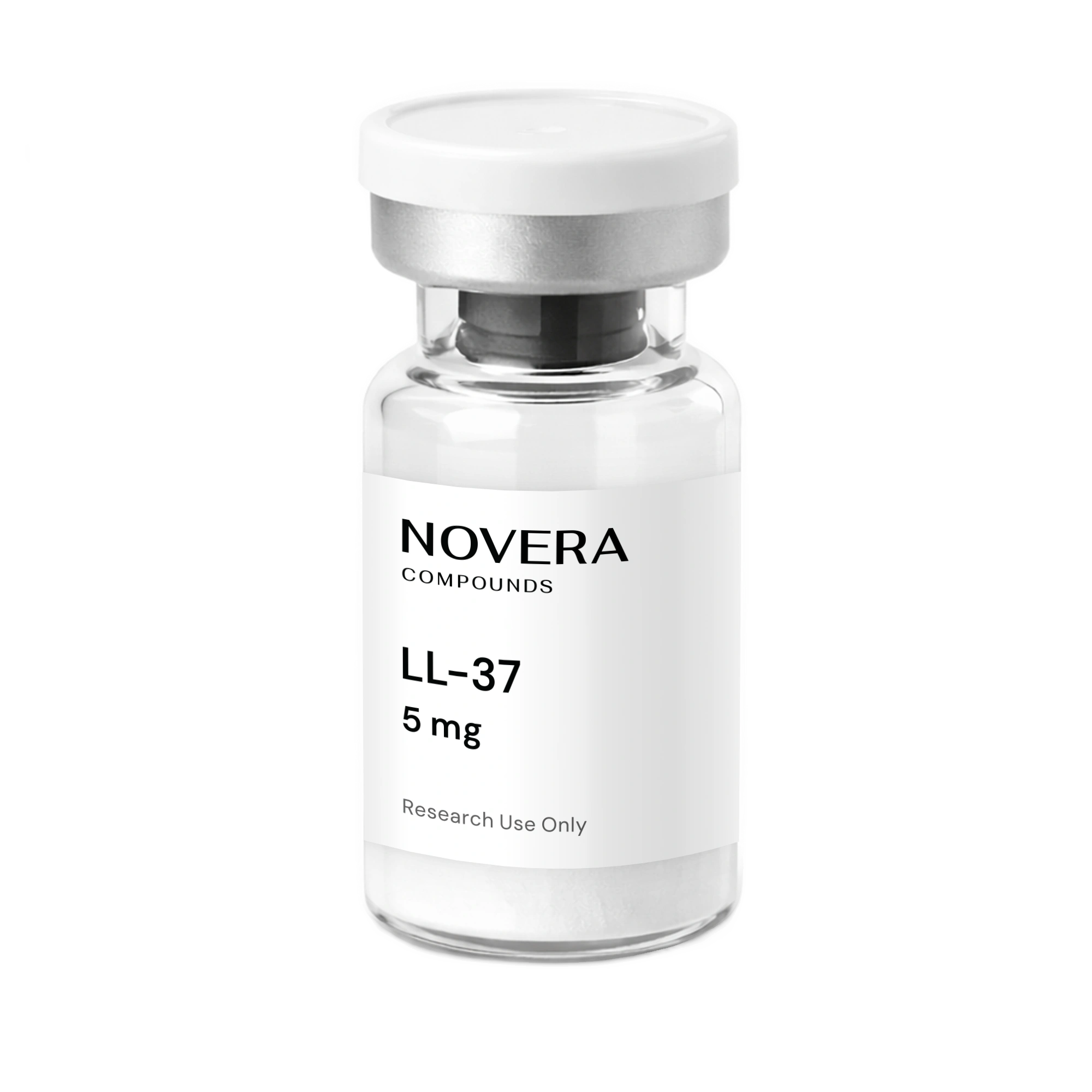
LL37
Ambient shipping · Express available · 28-day delivery guarantee
Bulk pricing. Buy 6 or more vials and save up to 26% — pick a quantity tier above.
99% Purity Guarantee
Each peptide batch is tested and verified to meet or exceed 98–99% purity (HPLC).
Storage Handling Notice
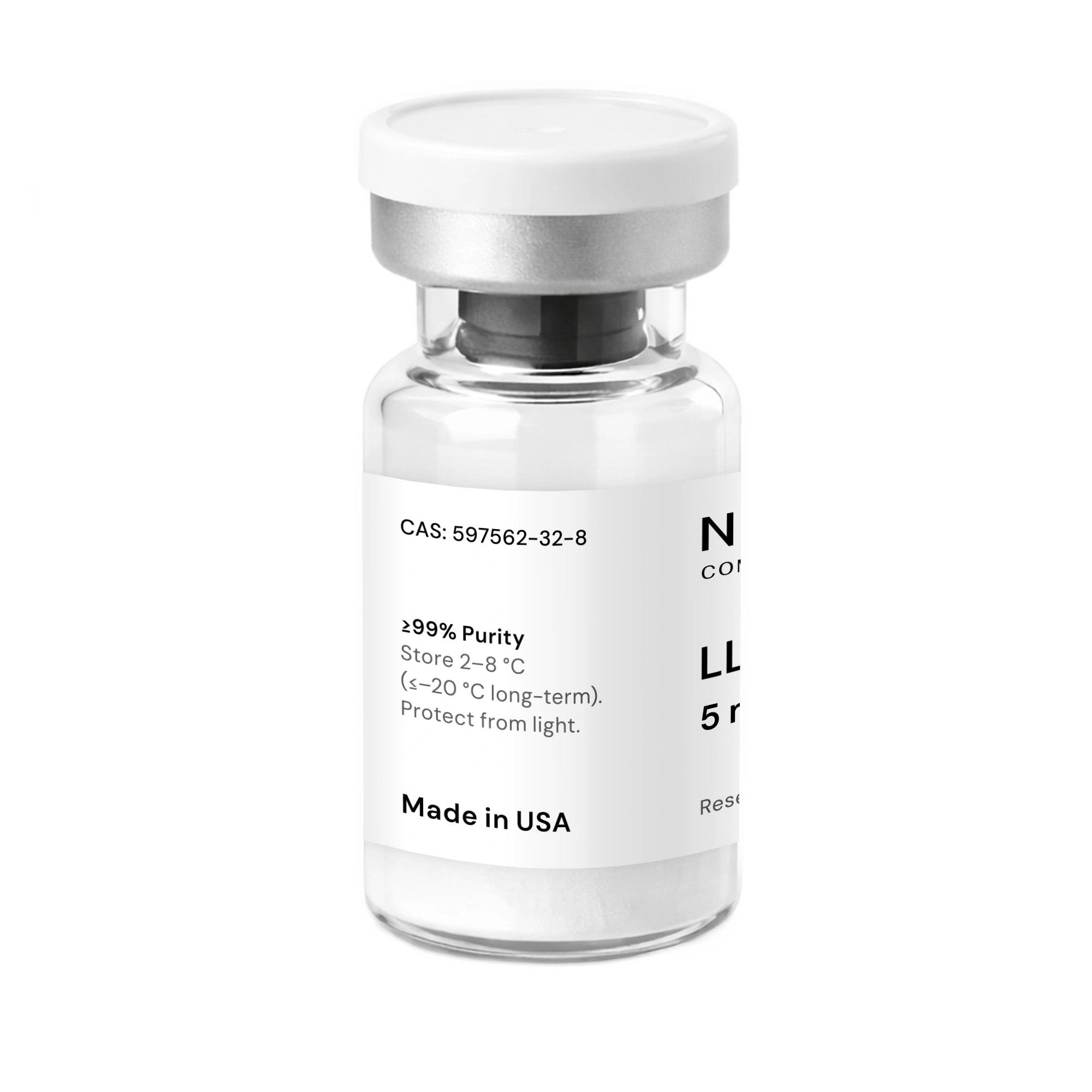
Store 2–8 °C (≤–20 °C long-term). RT exposure during transport acceptable. Protect from light.
Certificate of Analysis (COA)
Sign in to view lab results →Tested for: Purity (HPLC). Lab result PDFs are listed below for signed-in researchers.
1 lab report available to signed-in researchers.
For research and laboratory use only. Not for human or animal consumption.
Buy LL-37 peptide exclusively for research applications in qualified laboratories and academic institutions. Our platform provides secure ordering processes for institutional buyers and research coordinators. We offer discreet and reliable delivery to research facilities nationwide. The formulation is available in standardized configurations to support various research requirements. When you order LL-37 peptide through our system, complete quality documentation is included. This product cannot be sold for human consumption or veterinary applications. No prescription is required for qualified research institutions to buy LL-37 peptide online.
Product overview
Researchers investigate peptide interaction and signaling using LL-37 in experimental settings. Laboratory teams explore experimental immune-related research models in controlled environments. Immune-related research models examine how peptides function in cellular defense systems. Scientists conduct laboratory-based peptide stability studies under various conditions. Research groups examine how peptides maintain structure and function in experimental frameworks. These studies occur exclusively in research settings without clinical applications.
Research focus
LL-37 is investigated in research environments for peptide interaction analysis. Scientists have studied this compound within controlled laboratory models using standardized protocols. The formulation is explored for experimental peptide interaction research in academic facilities. Researchers evaluate the peptide under controlled conditions without outcome claims.
Methodological notes
Store LL-37 in cool, dry, light-protected conditions between 2-8°C. Light-protected conditions mean storage away from direct sunlight and intense artificial lighting. This product is intended for laboratory handling only by qualified research personnel. Qualified personnel have received appropriate training in peptide handling and storage procedures. Avoid moisture exposure as water content can affect peptide stability and quality. Avoid heat exposure above recommended temperature ranges to maintain structural integrity. Structural integrity refers to peptides maintaining their proper molecular configuration. Reconstituted solutions should follow established laboratory guidelines specific to peptide research protocols.
Quality & sourcing
Each LL-37 batch undergoes comprehensive purity verification procedures through analytical testing. Analytical testing uses scientific instruments to measure peptide composition and quality. Our processes ensure batch-to-batch consistency across all research supply orders. Internal quality assurance standards follow research-grade supply positioning for peptide compounds. Research-grade supply means products meet specifications required for scientific laboratory use. Testing protocols verify peptide purity and structural characteristics using validated methods. Every unit meets our specifications before receiving distribution approval. Laboratory certificates accompany each order for institutional tracking and compliance documentation.
Chemical properties
- CAS: 597562-32-8
- Chemical Formula: C₂₀₅H₃₄₀N₆₀O₅₃
- Molecular Weight: 4493.3 g/mol
- Peptide Sequence: Leu-Leu-Gln-Asp-Phe-Phe-Arg-Asn-Lys-Ser-Lys-Lys-Ile-Gln-Gly-Glu-Lys-Leu-Lys-Lys-Asp-Arg-Ile-Arg-Asn-Thr-Ala-Ile-Arg-Asn-Leu-Ile-Gly-Arg-Ile-Ala-Leu
- Synonyms: Cathelicidin, ropocamptide, Bac4, Cathelicidin antimicrobial peptide 18
- Shelf life: 24 months from the manufacturing date.
LL-37 is a short synthetic peptide consisting of 37 amino acids in sequence. This peptide is derived from a larger naturally occurring protein found in research models. Immune-related peptides are studied in research to understand molecular defense mechanisms. Molecular defense mechanisms describe how cells respond to external molecular challenges. The general role of peptides in laboratory research models includes serving as molecular tools. Molecular tools help scientists investigate cellular processes in controlled experimental settings. Researchers examine how this peptide interacts with various molecules and cellular components. Laboratory research investigates peptide stability, structure, and interaction patterns in controlled systems.
Key features
LL-37 provides a synthetic research peptide formulation developed for scientific applications. Synthetic peptides are manufactured compounds created through chemical synthesis processes. Each batch undergoes high-purity testing to ensure compound consistency across orders. The formulation is designed for controlled laboratory environments conducting peptide interaction research. Peptide interaction research examines how peptides behave with other molecules in systems. Secure packaging with discreet shipment protects the peptide during transit to research facilities.
Research & Education Tool
Peptide Dosage Calculator
Enter the vial amount, diluent volume, and target amount to estimate concentration, draw volume on a 1 mL U-100 syringe, and approximate vial yield.
For research and educational use only. Check all values against the product label, certificate of analysis, and any applicable professional guidance before relying on the result.
mg
Concentration
-
mcg / mL
Volume per Dose
-
-
Estimated Draws / Vial
-
rounded down to whole draws
Draw Reference
Enter values to estimate the syringe mark.
0
-
-
-
-
Express Tracked Shipping — $25
Prices:
- Flat $25 per order
- Ambient shipping, safe for lyophilized peptides
Regular Tracked Shipping — $15
Delivery in 5–10 days
Prices:
- Flat $15 per order
- Free on monthly Build a Box orders
What is LL-37 and what is its research significance?
LL-37 is a 37-amino acid cationic antimicrobial peptide derived from the C-terminal region of human cathelicidin precursor protein hCAP-18. It is the only cathelicidin in the human genome and is studied in research models for its roles in innate immune defence, microbial membrane disruption, wound-associated cellular signalling, and immunomodulatory receptor interactions.
What is the mechanism of LL-37's antimicrobial activity in research models?
In controlled research systems, LL-37 exerts antimicrobial activity by inserting into and disrupting bacterial membranes. Its amphipathic alpha-helical structure facilitates interaction with negatively charged bacterial lipopolysaccharide and phosphatidylglycerol, leading to membrane permeabilisation. This mechanism has been characterised using fluorescent dye leakage assays, electron microscopy, and minimum inhibitory concentration studies in vitro.
What receptor interactions has LL-37 been studied for beyond antimicrobial activity?
Beyond direct membrane disruption, LL-37 has been investigated in research models for interactions with formyl peptide receptor 2 (FPR2/ALX), P2X7 purinergic receptors, and epidermal growth factor receptor (EGFR), with downstream effects on inflammatory signalling, cellular migration, and growth factor pathway activation studied in cell-based systems.
How should LL-37 research compound be reconstituted?
LL-37 is typically reconstituted in sterile water or phosphate-buffered saline. Due to its cationic character, it may interact with negatively charged surfaces including certain plastics and glass; use of low-binding tubes is recommended. Stock solutions should be aliquoted and stored at -80°C to minimise degradation from repeated freeze-thaw cycling.
Is LL-37 intended for human use?
No. LL-37 as supplied by Elivena is a research-grade compound for use in controlled laboratory settings only. It is not approved for human administration, therapeutic use, or clinical application outside formally registered clinical programmes.